
3am Stories, 14 March 2026
You Ate It in Nine Minutes. It Took Him Twelve Hours to Make.
Part me. Part fiction. All love.
3am stories
You ate it in nine minutes. It took him twelve hours to make.
4:12am.
Somewhere in Toa Payoh, an uncle's alarm goes off.
He swings his legs off the bed without hesitation. No snooze. He hasn't snoozed it in forty years. His wife stirs but doesn't wake. She stopped waking fifteen years ago.
His body moves through the dark the way it has every morning since 1986. Bathroom. Shirt. Keys. The motorcycle starts on the first kick because he services it himself every Sunday.
At the same time, somewhere in the same estate, a man in his thirties rolls over, silences his phone, and pulls the blanket up.
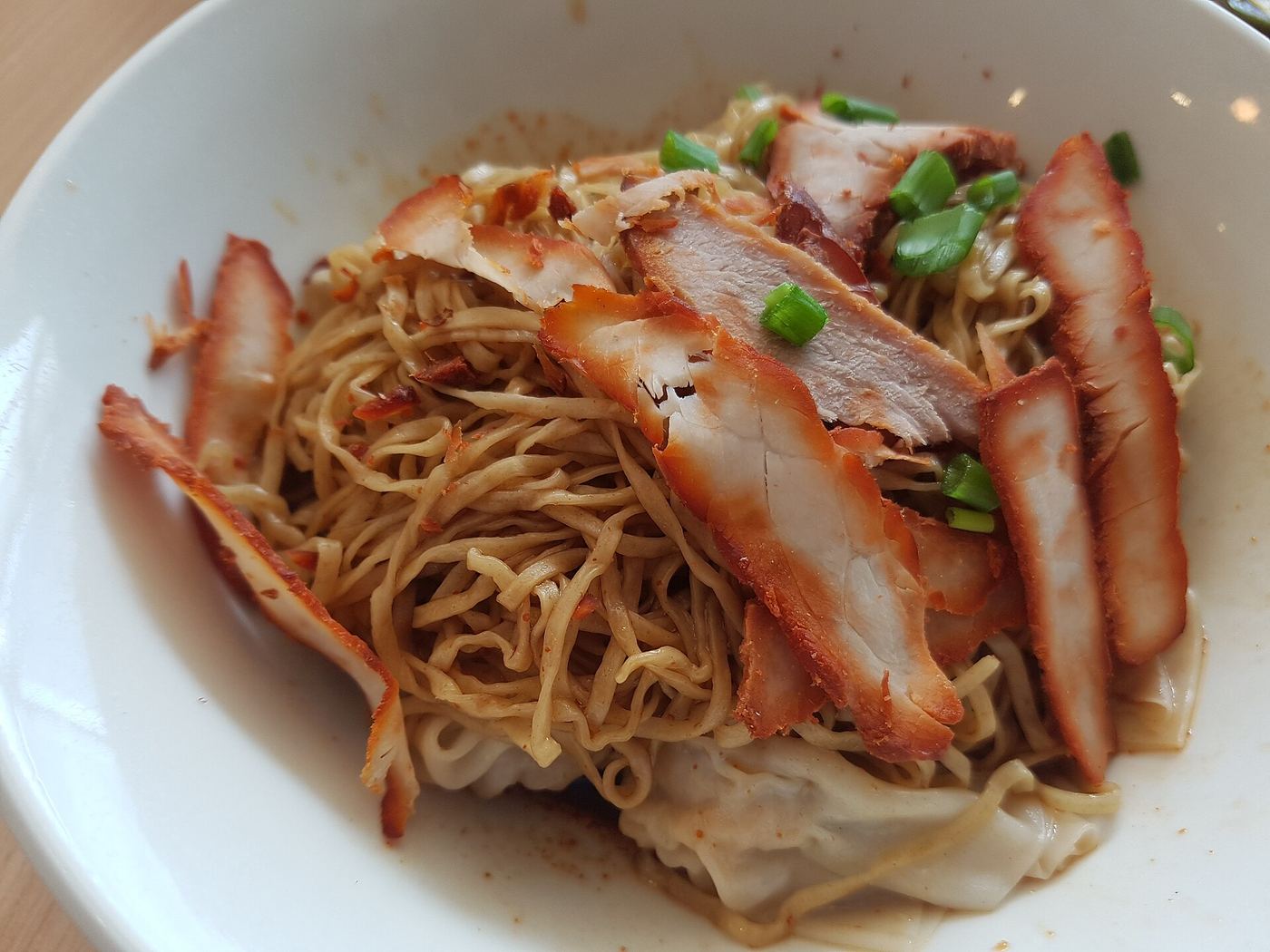
At noon, the second man will walk into the first man's stall and say "char siew rice" without looking up from his phone.
He will eat it in nine minutes.
It took twelve hours to make.
His name is Uncle Koh.
The stall has a name too, but nobody uses it. The signboard is sun-faded and the red paint cracked at the corners.
People just say "the char siew uncle at Block 75" and everyone in the estate knows exactly where you're talking about.
He started the stall in 1986.
He was twenty-six.
His father had run a pushcart selling roast meat along Seng Poh Road in the sixties, back when hawkers lined the streets and you carried your own bowl from home.
When the government moved the street hawkers into food centres, his father got a stall. When his father's knees gave out, Uncle Koh took over. Nobody asked him to. Nobody held a meeting about it. His father just couldn't stand one morning, and Uncle Koh was standing by the next.
That was almost forty years ago.
The recipe has not changed. Not because Uncle Koh is stubborn. Because the recipe does not need to change.
The marinade goes on at midnight. Soy sauce, five-spice, maltose, red fermented beancurd, a little sugar, a little sesame oil.
The proportions are not written down.
They live in his hands.
His father never wrote them down either. He showed Uncle Koh once. Once was enough.
The oven lights at 3am. Charcoal, not gas. Gas is easier, faster, cheaper, and Uncle Koh knows this because every few years someone tells him. He nods and continues using charcoal. The char siew needs the smoke. Without the smoke, it's just sweet pork. With the smoke, it becomes the thing that people queue twenty minutes for without being able to explain why.
By 4:30am, the first batch is hanging. The glaze is still dripping. The kitchen smells like someone caramelised the whole of childhood and hung it on hooks.
By 10:30am, the stall is open.
By 10:32am, the first customer is already pointing at the glass.
The regulars.
They don't need to speak. Uncle Koh sees them coming and the order begins before they arrive.
Ah Huat, early sixties, retired bus driver. Every Monday, Wednesday, Friday.
Char siew rice, extra sauce, no vegetables.
He arrives at 10:45am because he knows the first batch is the best batch and the queue hasn't built yet. He sits at the same table, the one closest to the pillar, and eats with the slow, deliberate rhythm of a man who has nowhere else to be and is perfectly fine with that.
He never says much. Sometimes he nods at Uncle Koh on the way out. Sometimes he just raises his hand.
Once, Uncle Koh was closed on a Wednesday — his daughter's graduation — and Ah Huat stood in front of the shuttered stall for a full minute. Not angry. Just lost. Like a man who had shown up at his own front door and found the lock changed.
Then there's Priya.
Late twenties. Works at the polyclinic two blocks away. She comes during her lunch break, always in scrubs, always in a rush. Char siew rice, less rice. She eats standing at the counter because sitting down feels like a commitment to a break she doesn't have time for.
She once told Uncle Koh she'd been eating his char siew since she was eight. Her father used to bring her after Saturday enrichment class. The father would order two plates and they'd share. One char siew, one roast pork. She always stole the crispy bits off his plate and he always pretended not to notice.
Her father passed four years ago. Stroke.
She doesn't order the roast pork anymore.
She doesn't know why. She just doesn't.
Uncle Koh noticed. He never asked.
Then the boy. Darren.
Seventeen.
Full uniform.
School bag on the chair next to him like it's a person.
He orders char siew noodles, dry, extra chilli.
He doesn't come for the food.
He comes because this is the thirty minutes between school and tuition where nobody is telling him what to do. Not his mother. Not his teacher. Not his tutor.
Just a plate of noodles and his earphones and the sound of the hawker centre at lunch...the clanking trays, the auntie shouting "table here got people or not," the ceiling fans that been spinning since before he was born.
One afternoon, Uncle Koh noticed Darren sitting with his noodles untouched. Just sitting. Staring at the table.
Uncle Koh walked over with a small bowl of soup. The free kind. The pork bone broth he keeps simmering on the back stove all morning for no reason other than his father used to do the same.
He placed it next to the noodles and said, "Drink first. Noodles can wait."
Darren looked up. He didn't say thank you. His eyes were red.
He drank the soup.
Uncle Koh went back to his stall and never mentioned it again.
Then there's the couple.
They come every Sunday.
He is seventy-eight. She is seventy-six. They have been married for fifty-two years. They order one plate.
One.
Char siew rice. Normal portion. Two sets of chopsticks.
She takes the leaner pieces. He takes the fattier ones. They don't discuss this. They haven't discussed this in decades. The negotiation happened sometime in the 1990s and was settled without anyone saying a single word.
They eat slowly. Not because they want to. Because at seventy-eight and seventy-six, slow is the only speed that doesn't hurt.
Sometimes their hands reach for the last piece at the same time.
And when that happens, she always lets go first.
And he always splits it in half with his chopsticks and places one half on her side.
After fifty-two years of marriage, that small act is not about the char siew.
It has never been about the char siew.
Uncle Koh watches them from behind the glass. He has watched them every Sunday for eleven years. He knows them and he doesn't know them. He knows what they order. He doesn't know their names.
He doesn't need to.
He knows the old man always pulls the chair out for his wife before sitting down. He knows the woman always wipes the chopsticks with a tissue before passing them to her husband.
He knows they never look at their phones.
He knows they talk in low voices, heads slightly tilted toward each other, the way old couples talk when the world has gotten loud and they have decided, together, to stay quiet.
He knows that one day, one of them will come alone.
And he knows he will give that person the same plate, the same portion, the same two sets of chopsticks.
And he will not say a word.
Because some things a hawker learns are not about food.
The stall will close one day.
Uncle Koh knows this. He doesn't say it often. But he knows.
His son is an engineer.
Good job.
Air-conditioned office.
His daughter is a teacher. Both educated. Both comfortable. Both everything he woke up at 4:12am for forty years to make sure they could become.
He asked his son once. Just once. Casually, over dinner. "You want to take over the stall next time?"
His son laughed. Not cruelly. Affectionately. The way children laugh when their parents suggest something from a world that no longer exists.
"Pa, you want me to wake up at 4am?"
Uncle Koh laughed too.
But that night, he lay in bed and stared at the ceiling for a long time.
Because the recipe is not written down.
It has never been written down.
It lives in his hands. In the way he knows by feel when the marinade is right. In the way he can hear from the sound of the sizzle whether the char siew needs another minute. In the way he slices each portion to the exact same thickness without ever once using a scale.
His father taught him once.
Once was enough.
But there is no one left to teach.
The median age of a hawker stall operator in Singapore is fifty-nine. In 2024 alone, dozens of beloved stalls closed permanently. Some because of health. Some because of rent. Some because of the quiet, simple truth that the uncle's children became exactly what the uncle spent his whole life hoping they would become.
And that is the most Singaporean tragedy of all.
Not that the children failed.
That they succeeded.
That they succeeded so completely, they will never need to wake at 4:12am. They will never stand over charcoal in the dark. They will never carry a recipe in their hands because they will never need to.
And the stall will close not because the food got worse.
But because love worked.
You probably ate something today that someone woke up in the dark to make for you.
You probably didn't think about it.
You pointed at the glass.
You tapped your phone.
You ate in nine minutes and wiped your mouth and went back to your desk.
You didn't see the 4:12am alarm. The charcoal lit at three. The marinade mixed at midnight.
The motorcycle that starts on the first kick. The hands that know the recipe by feel because a father showed his son once, forty years ago, and that once was enough.
You didn't see the man behind the glass watching the old couple share their last piece of char siew every Sunday. You didn't see him place a bowl of soup next to a teenager who couldn't eat. You didn't see him close the stall on a Wednesday for his daughter's graduation and think about his own father, who never closed the stall for anything. Not even the day Uncle Koh was born.
You didn't see any of it.
But it was all there.
Every plate. Every time.
The most important people in your life are not always the ones who sit at your table.
Sometimes they're the ones standing behind the glass.
Serving you something that took twelve hours and forty years to make. And asking for nothing in return except that you come back tommorow.
Next time you sit down at a hawker stall, look up.
Not at the menu.
At the uncle.
And if he's old, and his hands are rough, and the signboard is faded, and there's no one young standing beside him learning the recipe...
...just know that what you're eating might be the last generation of its kind.
And it's not going to disappear because nobody wanted it.
It's going to disappear because somebody loved their children enough to make sure they'd never have to make it.
— 3am stories. Pass it on.