The Origin, 21 April 2026
They told him the road alone would take fifteen years to build.
He did it in three.
A 20-kilometre access road, blasted and carved through dense jungle and up the side of a mountain called Gunung Ulu Kali, 1,800 metres above sea level, 58 kilometres from Kuala Lumpur. There was no electricity up there. No water supply. No sewage system. No reason for anyone to go.
His friends thought he was mad.
He built the road anyway.
And then he built a casino at the top.
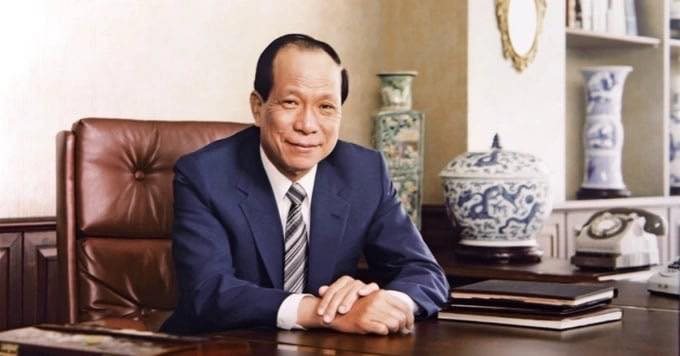
His name was Lim Goh Tong.
He arrived in Malaya in 1937 as a 19-year-old carpenter who'd never see his mother again. He died in 2007 as Malaysia's third richest man, worth US$4.3 billion, with the world's largest hotel sitting on top of the mountain nobody wanted.
He came from nothing.
Lim was born on February 28, 1918, in Anxi, a mountainous county in Fujian Province, China.
He was the fifth of seven children.
His father ran a small business dealing in vegetable seeds and other goods, while his mother cared for the family despite having bound feet, never once complaining.
When Lim was 16, his father died.
He left school and took over the burden of feeding his siblings, selling vegetable seeds along rural roads.
But China was falling apart. And in early February 1937, at the age of 19, Lim left through Xiamen and sailed for British Malaya, following a cousin who'd gone before him.
At his funeral in 2007, Tun Hanif Omar, the Deputy Chairman of Genting Group, said it plainly: "He was a young man of 19 who left his country never to see his mother again, to come and work in Malaya as a carpenter."
That's where the story starts. A carpenter.
Lim worked for his uncle for two years, learning the Malay language alongside the trade.
He became a building subcontractor and completed his first job: a two-storey school. In 1940, he returned briefly to Anxi, but went back to Malaya the following year as the war situation worsened.
The Japanese invasion of 1942 brought several near-death experiences. He survived by farming vegetables, then switched to petty trading to make a better living.
After the war, he built his construction business steadily, and by the early 1960s he was a successful contractor working on major infrastructure projects, including a hydroelectric project in the highlands of Pahang. And it was during one of those projects, while having dinner in Cameron Highlands, that the idea hit him.
The cool air.
The mountain breeze.
The relief from the tropical heat below.
Cameron Highlands was popular, but it was far from Kuala Lumpur. What if there was a mountain resort closer to the capital, a place people could reach in an hour instead of half a day?
Lim found his mountain: Gunung Ulu Kali, near a place called Genting Sempah.
It was steep, remote, covered in jungle, and had no infrastructure of any kind, but it was also only 58 kilometres from KL.
He explored the terrain himself.
Everyone told him it was impossible.
Banks refused to lend. Friends advised him to stop.
Nobody wanted to invest in a resort on top of a mountain that couldn't be reached. In his autobiography, Lim wrote: "The Genting project fitted my idea of an ideal business: nobody else was interested in it, which meant no competition."
On April 27, 1965, he set up Genting Highlands Berhad and poured his savings into the project. He mortgaged his properties. He sold assets from his other businesses. And he began building the road.
The government's engineers had estimated the access road would take 15 years to build, but Lim built it in three, supervising the construction personally and surviving six near-death experiences along the way.
The road alone would have been enough to make most people quit. For Lim, it was just the beginning.
What happened next changed everything.
Tunku Abdul Rahman, the Prime Minister of Malaysia, visited the construction site.
He saw the road. He saw what Lim was building with his own money, without government help, in a place nobody else would touch.
And he said that to help accelerate the development, the government would favourably consider an application for a casino licence.
On April 28, 1969, Lim submitted his application.
A cabinet meeting happened to be scheduled that same afternoon, and six hours later the application was approved.
Malaysia's first and only legal casino licence, granted in a single afternoon to a carpenter from Fujian who'd built a road up a mountain because he believed people would come.
He didn't ask for the licence first.
He built the road first.
The licence came because the road already existed.
The resort was set to open in 1971. Everything was ready.
And then the worst rainstorms in a century hit Kuala Lumpur and the surrounding area. Landslides closed the road at 180 different locations, and it took four months to repair the damage.
Genting Highlands officially opened for business on May 8, 1971.
And Lim never stopped building after that.
He expanded from one hotel to seven, added indoor and outdoor theme parks, and in 1997 built the Genting Skyway, a cable car system stretching two miles up the mountain.
In 1993, at the suggestion of Prime Minister Mahathir Mohamad, a township was developed at the base and named Gohtong Jaya in his honour. Today, the First World Hotel at Genting Highlands holds the Guinness World Record as the world's largest hotel, with 7,351 rooms.
More than 19 million people visit every year.
All of them driving up a road that was supposed to take 15 years to build.
Lim married Lee Kim Hua in 1944.
They had six children and 19 grandchildren.
On December 31, 2003, he handed the chairmanship of Genting Group to his second son, Lim Kok Thay.
Under Kok Thay's leadership, the group expanded globally, opening Resorts World Sentosa in Singapore in 2010 and Resorts World properties in the Philippines, the United States, and the United Kingdom.
Lim Goh Tong died on October 23, 2007, at Subang Jaya Medical Centre.
He was 89 years old. More than 20,000 people attended his wake.
Over 1,000 wreaths arrived from around the world, including from Las Vegas Caesars Palace and the Government of Fujian Province.
Li Ka Shing sent a personal condolence note. He was buried at Gohtong Memorial Park, at the base of the mountain he'd spent his life building.
Here's what stays with me about the man who built the road up the mountain.
Everyone told him you couldn't build a casino on a mountaintop, so he didn't start with the casino.
He started with the road.
He built the thing that made the impossible thing possible, and he did it with his own money, his own hands, and the savings from a career that began with a carpenter's wage and a language he didn't speak.
The road took three years instead of fifteen.
The casino licence took six hours.
And the mountain that nobody wanted became the most visited resort in Malaysia, with the world's largest hotel sitting at the summit.
A carpenter from Fujian. A road through the jungle.
And a question that turned out to be the only one that mattered: what if I build it and they come?
They came. 19 million a year.
Up a road that wasn't supposed to exist.