3am Stories, 24 March 2026
The Green Packet Had $2 Inside.
Part me. Part fiction. All love.
3am stories
The Green Packet Had $2 Inside.
It took you thirty years to find out what it was actually worth.
You were seven.
Your mother ironed your shirt that morning even though it was a Saturday and you didn't understand why.
She combed your hair with water from the kitchen tap and you squirmed and she held your head still with one hand the way she always did... firm, not rough, the grip of a woman who has ironed a thousand shirts and knows exactly how much force a collar needs.
"Later we go next door," she said.
Next door was 11-03.
Mdm Faridah's flat.
Your family was in 11-04.
You'd lived eight steps away from each other your entire life but you'd never been inside her home.
You didn't know why today was different.
Your mother carried a container of pineapple tarts.
The crumbly kind.
She'd been making them since Wednesday and the kitchen smelled like butter and sugar and something you couldn't name but that you now know was effort.
Three hours a batch. Two sticks of butter per tray. She made them every year but you never asked who they were for.
She knocked on the door.
It opened.
And the first thing that hit you wasn't the face or the voice or the greeting.
It was the smell.
Rendang.
Ketupat.
Something coconut. Something pandan. Something that was so different from your mother's kitchen that your nose didn't know where to put it. Your brain filed it under "not ours" and you remember that now, thirty years later, with something close to shame.
Not ours. You were seven. And already the categories existed.
Mdm Faridah was wearing a green baju kurung with gold thread at the sleeves. Her living room had been rearranged.
The sofa was against the wall.
There was a long table covered in food you didn't recognise... kueh lapis, ondeh ondeh, lontong in a deep pot, serunding in a bowl so dark it looked like earth.
There were shoes at the door.
So many shoes.
Shoes that meant people had been coming and going all morning through a door that had been open since dawn.
Your mother took off her slippers and placed them neatly at the edge. She nudged you. You took off yours.
And then she did something you have never forgotten.
She pushed you gently through the doorframe ahead of her.
Not hard.
Just a hand on your back.
The way you push a child into a swimming pool for the first time... not to drown them, but to teach them that the water will hold.
Her hand on your back was the whole lesson. You just didn't know it yet.
You sat on the sofa with your legs dangling because you were too short for your feet to touch the floor.
Faridah's grandchildren were running between the kitchen and the living room in baju melayu that were too stiff and too new and they looked at you the way you looked at them... with the careful curiosity of children who haven't yet learned that difference is supposed to be a problem.
One of them handed you a kueh.
Green.
Coconut.
You bit into it and something warm and sweet exploded in your mouth and you looked at your mother with wide eyes and she smiled and said nothing.
That was your first ondeh ondeh.
You didn't know its name. You didn't need to. Your tongue had already decided it was yours.
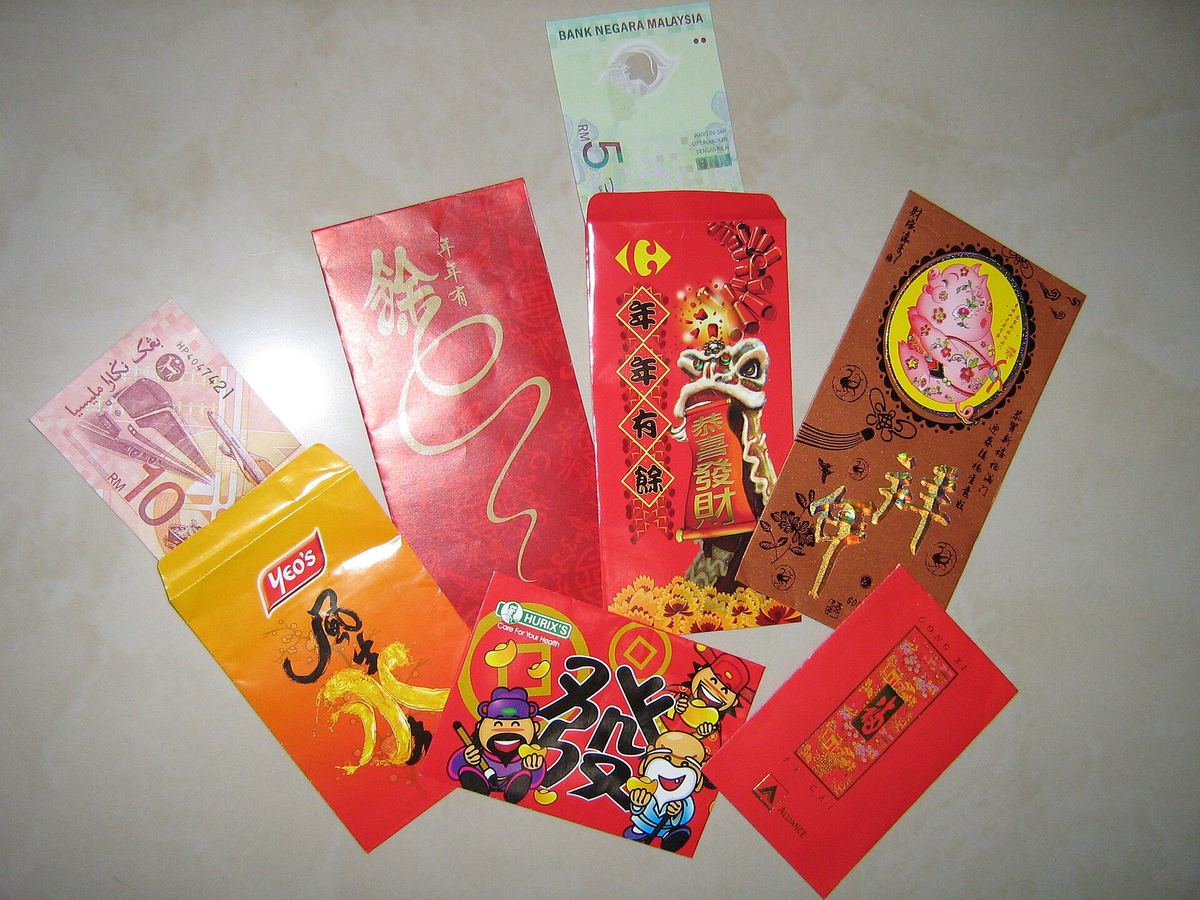
The green packet came at the end.
Faridah pressed it into your hands.
Small. Light.
Green envelope with gold trim.
She said "Selamat Hari Raya" and touched your head and you said "thank you Auntie" because your mother had rehearsed this with you in the corridor and you delivered the line exactly as practised.
You opened it in the lift.
$2.
You held it up to the fluorescent light as if checking whether there was something else inside.
There wasn't. Just a single note, folded once, with a crease down the middle.
You were disappointed.
You didn't say it.
But your mother saw it on your face the way mothers see everything on your face, and she said, quietly, "Don't be like that."
You put the $2 in your pocket and forgot about it by dinner.
You went back the next year.
And the year after that.
But the year you remember is thirteen. Because thirteen was the first year you didn't need the push.
Your mother was still getting ready.
Doing her hair. You were at the door already, slippers on, waiting. She looked at you. You said "I go first."
She didn't say anything. But something moved across her face... not a smile, not surprise, something that lived between the two. Something a mother's face does when her child takes the first step she's been building toward for six years and doesn't even know he's doing it.
You walked the eight steps.
You knocked.
The door opened and Faridah looked at you and she didn't say "boy."
She said your name. She said it the way Malay aunties say a Chinese name... with the tones slightly wrong and the vowels slightly stretched and something warm underneath the mispronunciation that made it sound better than it ever sounded in your own language.
You took off your shoes without being reminded.
You walked in without being pushed.
You sat down and Imran passed you rendang and you ate it with your hands because he'd shown you how the year before and the gravy still dripped down your wrist but this time nobody laughed because this time you were not a guest.
There is a feeling that happens when a place that was someone else's becomes yours too. It has no name. But your body knows it. You sit differently. You breathe differently. The air tastes like it belongs to you.
The last time was nineteen.
You were back from Tekong for the weekend.
Two days.
You had laundry to do and friends to see and a girl you were texting and the world was as large and as urgent as it always is when you're nineteen.
Your mother said "later we go next door" and you said "maybe after lunch." After lunch became after dinner. After dinner became tomorrow.
Sunday morning.
You were packing your bag for camp. Your mother came to your room holding a container of pineapple tarts. She didn't say anything. She just held them out. You took them. You walked the eight steps and knocked.
Faridah opened the door in the same green baju kurung.
The food was already being cleared.
The shoes at the door were fewer. Most of the visitors had already come and gone. You were the last one.
She didn't say anything about the timing. She took the pineapple tarts. She pressed a green packet into your hands. She touched your head even though you were taller than her now and the gesture looked different... she had to reach up, and her hand stayed a moment longer than it used to, the way people hold on to things that are leaving.
You opened it in the lift. $2.
You smiled this time. But not because of the money.
You didn't go back the following year. Or the year after that. Or the year after that.
Your mother never said why the pineapple tarts mattered.
She never explained what she was building.
She never sat you down and told you about July 1964, when the streets of Geylang Serai ran with blood and Chinese and Malay neighbours who had shared corridors for years suddenly couldn't share a street.
36 dead.
Hundreds hurt.
A country that was not yet a country learning, in the worst possible way, how fast the categories can turn into walls and the walls can turn into weapons.
She never told you that none of this... the open door, the rendang, the green packet, the eight steps between 11-04 and 11-03... was natural.
That it was built. On purpose. By people who remembered the blood and decided, every single day, to do something small and ordinary and unremarkable to make sure it never came back.
She just made pineapple tarts. She just pushed you through a door.
She knew what she was doing. You didn't. That's the whole point. By the time you understand why your mother ironed your shirt on a Saturday, you're supposed to be ironing your daughter's.
You're thirty-seven now.
You live in a condo in Punggol.
You have a wife and a daughter who is four.
Your neighbours are 12-04 and 12-06. You nod at them in the lift.
You look at your phone. The door closes. That's the entire relationship.
Last Saturday was Hari Raya.
Your mother called. She said Faridah is still in 11-03. Still makes rendang. Still opens the door. "Come and bring the girl," she said.
You said maybe. You had brunch plans. Your daughter wanted to swim. The pool had a new inflatable unicorn and she'd been talking about it since Thursday. You chose the pool.
The TV by the loungers was showing maps with red arrows. Ships stacked at the Strait of Hormuz, a chokepoint the width of this island, choking the world's oil supply.
Countries fracturing along the lines they always fracture along... identity, belief, the ancient conviction that the person on the other side of the wall is not yours.
Oil above $100 a barrel. Three days before Hari Raya, your PM stood in Tokyo and said "severe consequences" and "global recession" in the same breath. Your President called it a "major economic downturn." The world feels, in your PM's words, "darker and more dangerous."
Your daughter didn't notice. She was on the unicorn, laughing, kicking water at nothing.
Somewhere between the unicorn and the headline, you made a choice. You just didn't feel it as a choice.
Your mother didn't say anything when you told her you weren't coming.
But you heard the silence. You know the weight of that silence. It's the same weight as a green packet with $2 inside.
Almost nothing. And almost everything.
Here's what was inside the green packet.
Not $2.
The open door.
The smell of someone else's kitchen that your nose didn't know where to put.
A hand on your back pushing you across a threshold you didn't choose.
A woman in a green baju kurung who decided, without consulting anyone, that the Chinese boy from next door belonged at her table.
The first ondeh ondeh that exploded in your mouth and taught your tongue that "not ours" was a lie.
The moment she stopped calling you "boy" and started calling your name.
The gravy on your wrist that nobody wiped away because you were not a guest anymore.
Trust. Offered to a child who hadn't earned it, by a woman who didn't owe it, across a line that the rest of the world is burning over right now.
Your PM said nothing about Singapore's survival was inevitable.
Nothing about its success was assured.
He was right.
It was never inevitable.
It was built... by mothers who ironed shirts on Saturdays, by women who opened doors for children who didn't look like theirs, by $2 green packets that were never about the money.
It was built eight steps at a time.
Faridah is seventy-three.
She won't make rendang forever. The door won't be open forever. Your mother won't be there to push you forever.
And your daughter is four. She is watching everything you do. She is learning, right now, whether the door to 12-04 is something you walk through or something you walk past. She is filing it under "ours" or "not ours" and she doesn't even know she's doing it.
You are the hand on her back now.
The green packet is still in your mother's flat.
Third drawer, left of the TV console, in a tin that used to hold Jacob's biscuits. $2. A single note, folded once, with a crease down the middle.
It's the most valuable thing you own.
The doors were open last Saturday. All over this island, in HDB corridors you've never walked, women like Faridah laid out tables of food for children like you.
Some of those children walked in.
You chose the pool.
But the rendang is still in her fridge. And the door is still unlocked.
And Faridah still remembers the Chinese boy from 11-04 who showed up at thirteen without being pushed and ate with his hands and dripped gravy on her floor and made her feel like the eight steps between their doors was the smallest distance in the world.
It's Monday. You could still knock.
It was never $2.
— 3am stories. Pass it on.