Founders, 23 May 2026
The founder of one of Singapore's most successful restaurant chains can't cook.
His culinary skills, by his own admission, are limited to instant noodles, frying eggs, and cooking porridge.
He's not a foodie.
If you ask him about Michelin stars or certain ingredients, his answer is "sorry."
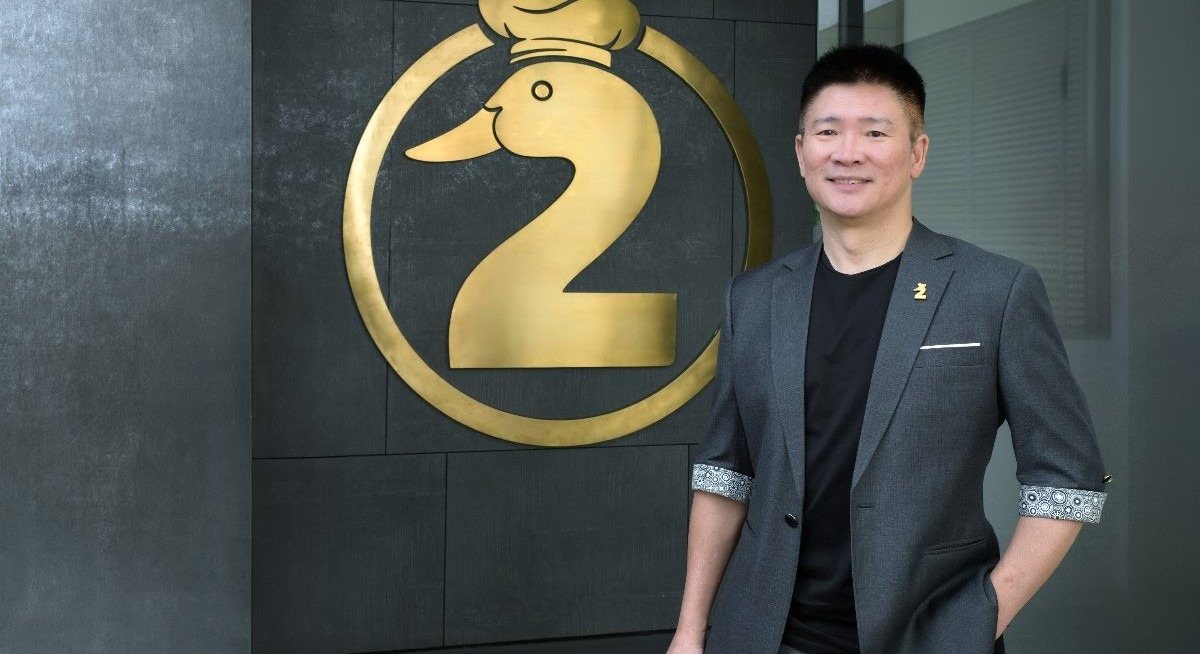
His name is Samuel Yik.
He's the founder and managing director of Dian Xiao Er, the herbal roast duck chain with 19 outlets across Singapore, and he was an auditor for a decade before he ever set foot in a commercial kitchen.
In 2002, Yik and his wife, who was then a marketing manager, quit their jobs.
They pooled about $200,000 of their savings and opened an 80-seat restaurant in Sago Street in Chinatown.
He didn't have a signature recipe.
He didn't have kitchen experience.
What he had was a herbal mix recipe he'd bought from a family friend in Johor Bahru who ran a popular herbal roast duck stall.
He bought the recipe. He hired people who could cook.
And then he did what an auditor does: he built the systems.
That distinction, between the person who makes the food and the person who builds the business around the food, is the entire story of Dian Xiao Er.
The timing could not have been worse.
He opened in 2002, SARS hit in 2003, then bird flu, then the 2007-08 financial crisis.
For a restaurant chain that serves duck, a bird flu scare is an existential threat.
He survived all three, and each crisis taught him something about margins, inventory management, and customer loyalty that his audit career never could have.
The business grew steadily.
One outlet became two, then five, then ten.
Today there are 19 outlets across Singapore.
The signature dish, herbal roast duck, is made with Cherry Valley ducks marinated in Chinese herbs and spices for hours, then roasted fresh daily. "I don't have too many opinions on what my chefs are doing," he told the Straits Times. "I leave it to them."
That line is the key to Dian Xiao Er.
Yik doesn't run a kitchen.
He runs a business.
He thinks about systems, branding, employee welfare, and customer experience. The food is his chefs' job. Everything else is his.
During COVID, most F&B businesses contracted.
Yik doubled his revenue.
He invested in technology, tightened operations, and adapted the brand for delivery and takeaway. While his competitors were closing, he was scaling.
In 2024, EY named him Singapore's Entrepreneur of the Year in the F&B category, selected from over 80 nominations.
The citation noted his strategic investment in branding and technology and his transformation of Dian Xiao Er into a household name.
Now here's the part that makes this post different from every other F&B founder story.
Samuel Yik gives his employees interest-free housing loans.
In Singapore's F&B industry, where workers are overworked, underpaid, and treated as replaceable, a founder offering interest-free home loans to his staff is almost unheard of.
His philosophy, repeated across every interview he gives, is simple: "Good business starts from well-being.
We focus on winning the hearts of employees and customers. When you have good staff, they will take care of the customer, and business will be a by-product."
He means it.
His wife is a director in the company.
They have a young son. And his three stated dreams for the business tell you everything about what he values: first, to make Dian Xiao Er a globally recognised brand.
Second, to "fly the Singapore flag and make herbal roast duck famous as a Singapore dish."
Third, to continue rewarding loyal staff so they can retire financially well.
That third dream is the one your staff will never forget hearing.
=============================
Samuel Yik...
He entered F&B with zero industry experience and built a 19-outlet chain because he understood something most chefs don't: the business of food is not about food.
It's about systems, people, and consistency.
He didn't need to be the best cook in the room.
He needed to build the room, hire the best cooks, and then get out of their way.
His four reasons for choosing F&B are worth writing down: one, everyone needs to eat, so demand is never the problem.
Two, gross margins can be high.
Three, food will never be made obsolete by technology, and four, it's a cash business.
That's not passion talking.
That's an auditor talking.
And it built one of the most loved restaurant chains in Singapore.
The auditor who can't cook.
The founder who gives housing loans.
The man who built 19 outlets by getting out of the kitchen and into the system.