Founders, 30 April 2026
His grandfather left Fujian Province in 1920 with a few dollars and a bag of clothes.
He landed in Malaysia and opened a timber business.
His son, Yeoh Tiong Lay, never went to university.
He started a construction company in 1955, initially based in Kuala Selangor, building military garrisons, hospitals, and low-cost housing.
The company grew, and its headquarters eventually moved to Jalan Bukit Bintang in Kuala Lumpur.
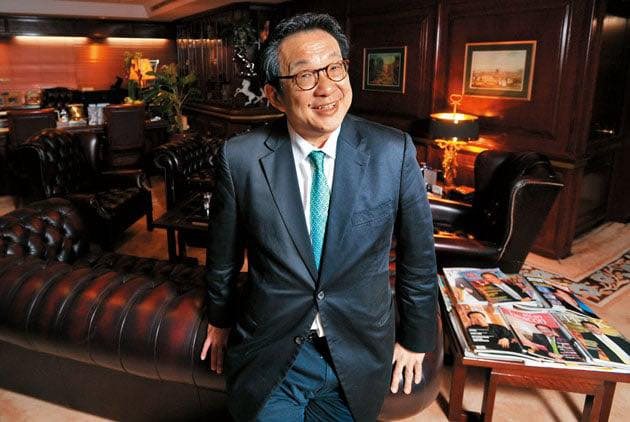
While his friends were sightseeing during school holidays, the eldest son was on construction sites in the Malaysian heat, learning from the men who poured the concrete. His name was Francis Yeoh. He was 16 years old, and he was already offering to drop out of school to help his father full-time. His father said no.
Then the 1970s oil crisis hit, and two generations of savings were wiped out.
Francis later described it simply: "It was a turbulent time." His father managed to scrape together enough money to send him to Kingston Polytechnic in London to study civil engineering. "He wanted me to come back and change the way we do things," Francis recalled.
The son came home in 1978, at the age of 24, and joined the family business.
For ten years, he worked his way through the company, learning every division.
In 1988, his father made him managing director.
By then, YTL was already listed on the Malaysian bourse, but it was still fundamentally a construction company. Today, the YTL Group comprises five listed entities with a combined market capitalisation of approximately RM100 billion, around US$21 billion, and total assets of RM84 billion. It serves 12 million customers on three continents.
From a construction company in Kuala Selangor to a conglomerate spanning construction, power, water, telecoms, luxury hotels, and cement, built across three generations by one family.
In 1993, Francis engineered the deal that changed everything: YTL became Malaysia's first independent power producer, winning a landmark contract with Tenaga Nasional to build and operate power plants.
The company had been a construction firm for 38 years. Overnight, it became an energy company. The logic was Francis's own: construction is cyclical, but power is recurring, and if you build a power plant once it generates revenue for decades. That single insight became the DNA of every acquisition that followed.
In 2002, he bought Wessex Water in England for £1.2 billion, less than the £1.4 billion that Enron had originally paid for it.
The Daily Telegraph ran a headline asking: "Who the hell are YTL?"
The answer was a construction company from KL that had decided to become a global utilities operator. Wessex Water is now ranked among the top five most efficient water and sewerage providers in England. Francis told the Wessex employees: "We assured them that we weren't going to strip the company of its assets and take short cuts to make profits. That wasn't what YTL was about." They grew the company together.
YTL also acquired PowerSeraya in Singapore, a major electricity supplier, and built the Express Rail Link connecting KL Sentral to Kuala Lumpur International Airport.
In 2010, Francis brought Malaysia's first and only 4G mobile network to the country.
He bought and redesigned Starhill Gallery and Lot 10 on the very same Bukit Bintang street where his father had started the company from a shophouse, and the Starhill Global REIT now owns a significant part of Singapore's Orchard Road.
Every acquisition followed the same principle: infrastructure that generates recurring income, managed with engineering discipline, held for the long term.
More than 70% of YTL's income today is recurring. "That," Francis has said, "is one of the reasons I can sleep well at night."
There's another part of the Francis Yeoh story that most business profiles leave out.
At 16, Francis walked into the Chinese Baptist Church on Bukit Bintang.
He was struggling with something he's never fully described publicly, and a priest told him not to worry, that by Monday his problem would be gone.
On Monday, the problem vanished. He converted to Christianity from Buddhism, the first in 20 generations of his family to change faith, and the reaction was fierce. "My parents and siblings were up in arms," he said, but he stayed.
That conversion shaped the company.
Francis tells every new hire at YTL they must master three languages: the language of God (integrity), the language of man (relationships), and the language of machines (efficiency). He calls himself "a steward of God's wealth," and he means it literally. "There is a lack of personal ego in the approach that YTL takes to business decisions," he told the Wall Street Journal. "We practice what we preach."
His wife, Rosaline, died in 2007.
They had five children, Ruth, Jacob, Joseph, Joshua, and Rebekah, and all five now work in the YTL Group.
Francis runs the company alongside six siblings, all of whom are fellow directors. He set the bar high for every family member entering the business: "I didn't want any molly-coddled sibling coming in. I didn't want nepotism, cronyism and all that stuff." An honours degree in engineering was the minimum.
The world noticed.
The Queen made him a Commander of the Order of the British Empire in 2006 and upgraded it to Knight Commander in 2019.
The Emperor of Japan conferred the Order of the Rising Sun in 2018.
The Italian Government named him Grand Officer of the Order of the Star of Italy the same year. In 2010, he received the Oslo Business for Peace Award. And he is patron of the Kuala Lumpur Symphony Orchestra, a personal friend of the late Luciano Pavarotti, and the man who once flew 200 guests to his private island for a Pavarotti concert.
============
Francis Yeoh....
His grandfather arrived with nothing.
His father built roads from a shophouse.
The oil crisis wiped them out.
And the eldest son, who'd spent his school holidays on construction sites learning from the men who poured the concrete, came home from England with a civil engineering degree and turned a $200,000 company into a $21 billion conglomerate that powers parts of Malaysia, supplies water to millions in England, and owns a chunk of Orchard Road.
When the Daily Telegraph asked "Who the hell are YTL?", the answer was three generations of a family from Fujian, a construction company that started with military garrisons, and a builder's son who understood that the real money isn't in building things.
It's in owning what you've built.