3am Stories, 26 March 2026
The Drumstick Was Always on Your Plate. You Never Asked How It Got There.
Part me. Part fiction. All love.
3am stories
The drumstick was always on your plate. You never asked how it got there.
You were eight the first time you noticed.
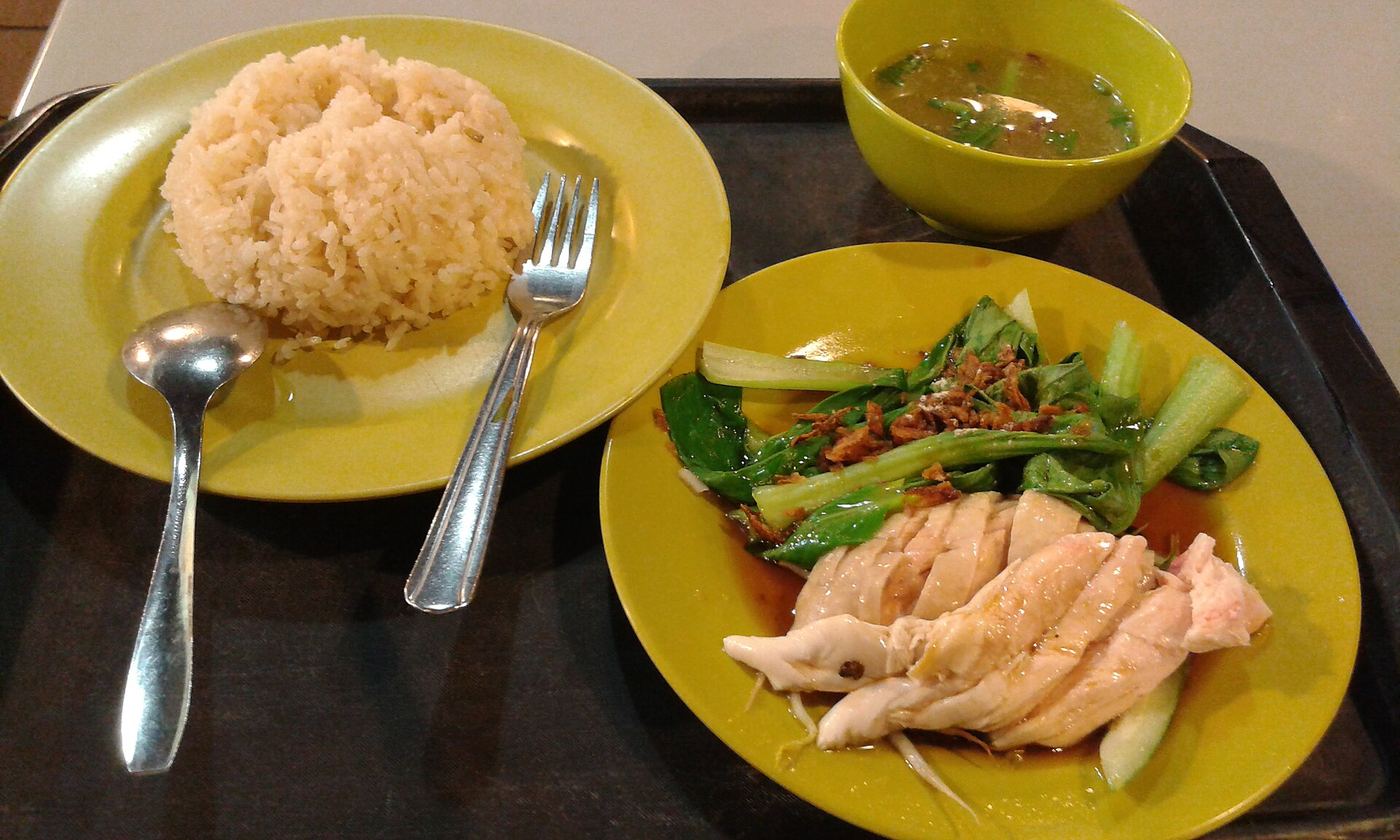
Chicken rice.
The one from the hawker centre near your school.
Your mother had laid out the plates... rice in the centre, chilli on the side, soup in the small bowl, cucumber slices that you always pushed to the edge and your father always ate without comment.
And on your plate, the drumstick.
Not on your mother's plate.
Not on your sister's plate.
Not on your father's plate.
Yours.
You didn't ask for it. You didn't even like drumsticks that much at eight. You just ate it because it was there and you were hungry and the dark soy sauce was good and the rice was warm and nothing about that dinner seemed remarkable.
It wasn't remarkable. That was the whole point. Your father had been doing it since before you could hold a spoon. You just never looked up long enough to see his hand move.
Your father was not a man who talked.
He was a man who drove.
He drove you to school every morning for twelve years.
Reversed the car out of the lot at 6:45am with one hand on the steering wheel and one arm across the back of your seat and his head turned so close to yours you could smell the Brylcreem and the Kopi-O and the faint trace of the cigarette he'd smoked at the void deck while waiting for you to tie your shoes.
He never turned on the radio.
He never asked about your grades.
He never said "have a good day."
Twenty minutes.
Clementi to Bukit Timah.
Windows down because the aircon used petrol and petrol cost money and money was something he thought about in silence so that you would never have to think about it out loud.
When you got out of the car, he didn't wave. He waited until you walked through the school gate. He watched you until you disappeared behind the basketball court.
Then he drove to work.
Every morning. For twelve years. You never once turned around to see if he was still watching.
He was.
Your father had three phrases.
That was it.
Three.
Forty years.
"Eat more."
He said this at every meal. He said it when you were full. He said it when you came home from NS ten kilos heavier and he still said it.
But the time you remember is the night you came home from your first breakup.
You were seventeen.
You hadn't told anyone.
You sat at the dinner table and moved the rice around with your chopstick and said nothing and your mother asked "what happened" and you said "nothing" and she asked again and you said "nothing lah" and she looked at your father and your father looked at your plate.
He picked up the drumstick with his chopstick.
He put it on your plate.
He said "eat more."
He didn't ask what happened.
He didn't say it would be okay.
He just gave you the best piece of meat on the table and made the world smaller. Small enough to fit inside a drumstick. Small enough to hold.
You ate it. And something loosened in your chest. Not because of the chicken. Because the man who never said anything had just said everything he knew how to say, and it was enough.
"Got money?"
He asked this at the most unexpected moments.
Before school. Before a date. Before your flight to Melbourne. Before your wedding.
You always said "got, got."
Even when you didn't.
He always knew when you didn't.
He'd reach into his back pocket and take out his wallet... the brown leather one, cracked, clasp broken since 2003, held together by a rubber band... and he'd pull out two fifties and press them into your hand and close your fingers around them and say nothing.
Inside that wallet, behind the POSB passbook and the EZ-Link card, there was a photo. You didn't know about the photo until your mother mentioned it years later, almost accidentally, like it was nothing.
Your Primary 1 photo.
You, six years old, in a white uniform, smiling with missing teeth.
He'd been carrying it for thirty years.
He never mentioned it.
He never showed anyone.
He just carried it the way he carried everything... in silence, in the back pocket, close to the body, where nobody could see.
"Don't stay up."
He said this every night.
From the living room.
While you studied in your bedroom.
At 11pm.
Then again at midnight.
Then once more at 1am, softer, from behind your closed door.
You thought he was nagging.
You were thirty-two before you understood that he'd been checking on you at midnight since you were two months old. The habit didn't update when you grew up. The habit didn't know you were twenty-five, or thirty, or married with your own bedroom door to close.
It only knew that his child was awake and the world was dark and something in his chest wouldn't settle until he heard you breathe.
One night, years after you'd moved out, you were driving home on the expressway at 2am. Tired. Eyes heavy. The road was empty and the white lines were blurring and you felt yourself drifting and then his voice came back... clear, steady, from behind a door that was two hundred kilometres and twenty years away.
"Don't stay up."
You pulled over.
You sat in the car for ten minutes.
You drove home.
His voice saved you that night. And he doesn't know. And you've never told him. Because how do you tell a man that the three words he said every night for thirty years reached across an expressway at 2am and pulled you back from the white line?
The drumstick, though.
Come back to the drumstick.
It wasn't just chicken.
It was the best piece.
The one with the most meat.
The one everyone wants.
And every time your family sat down to eat, it ended up on your plate.
Not because you were the favourite.
Because you were his child and his child gets the best piece and this is not a decision he makes consciously. This is who he is.
You know what was on his plate?
The wing.
The neck.
The piece closest to the bone that nobody else wanted.
He ate it without complaint. He ate it the way he did everything... quietly, completely, as if scarcity was not a sacrifice but a preference.
He made you believe he liked the wing.
He made you believe the neck was his favourite part.
He made you believe, for twenty years, that the drumstick just happened to land on your plate.
It was never luck. It was his hand. Moving while you weren't looking. Every single time.
It wasn't just the drumstick.
The fan.
Your bedroom fan was always on. His wasn't. You thought the master bedroom was cooler. It wasn't. He just didn't turn his on because the electricity bill was something he carried in his head the way he carried everything... silently, without expecting anyone to notice.
The umbrella.
When it rained and there was only one, he'd hand it to you and walk to the car in the rain and drive home wet and say nothing and the next morning the umbrella was back in the holder, dry, as if it had never left.
The seat.
The front seat was always yours after you turned twelve. He never explained this. It just happened. The front seat had the legroom, the aircon vent, the better view. He gave it to you the way he gave you everything... by rearranging the world so quietly that you thought the world had always been that shape.
Your father didn't give you things. He gave you the world with his share removed. And he did it so carefully that you never noticed the missing piece was him.
You were twenty-three when you left for Melbourne.
Changi. Terminal 3.
Your mother cried at the check-in counter.
Your sister hugged you.
Your father carried your bag from the car to the counter even though the bag had wheels and the wheels worked fine and you said "Pa, I can" and he didn't let go.
He put the bag down. He stood there. Singlet tucked into his pants. Belt too loose because he'd lost weight that year but hadn't bought a new one because belts cost money and money was for other things.
"Got money?"
"Got, got, Pa."
He reached for the wallet.
The rubber band.
The two fifties.
You pushed his hand back.
"Pa. I got."
And his hand stayed there.
In the air.
Between you.
And for one second his face did something you'd never seen it do. The muscles around his mouth pulled. The jaw set. He looked away. Not up. Away. Toward the departure board.
He read the board as if he was looking for a flight even though he'd never been on a plane in his life.
He wasn't reading the board. He was looking for somewhere to put the feeling that his son was leaving and his hand was empty and the wallet was still in his fist and there was nothing left to give.
He put the wallet back. He said "don't stay up." At an airport. At 2pm. In broad daylight.
It was the wrong phrase for the moment. It was the only phrase he had.
You walked through the gate. You turned around.
He was still standing there.
Of course he was. He'd been standing there your whole life. Watching you walk through gates. This was just the farthest one.
He's sixty-nine now.
He doesn't drive anymore.
His knees can't do the clutch.
He sold the car last year and took the bus for the first time in thirty years and called you that evening and said "the bus very cold ah" and you laughed and he laughed and that was the longest conversation you'd had in months.
He lives in the same flat.
Same bedroom.
Same fan he still doesn't turn on even though the electricity bill is no longer his problem because you pay it now and you've told him this four times and he still doesn't turn it on.
He still says "don't stay up" through the phone at 11pm even though you don't live there anymore. He still says "got money?" even though you earn more than he ever did and you both know it and neither of you says so.
He is still your father at 1am. He is still your father at sixty-nine. He will be your father when the words stop coming and the only thing left is the hand that moves the drumstick across the table without being asked.
Last Sunday.
You took your daughter to the hawker centre.
She's six.
She wanted chicken rice. The one with the dark soy sauce.
You ordered two plates.
The chicken came. You looked at the plate. You saw the drumstick.
And without thinking, without deciding, without any memory of learning it, your hand moved the drumstick from your plate to hers.
You didn't say anything.
She didn't notice.
She just ate it.
She looked up, mouth full, and said "Pa, you don't want?"
And you heard it.
Your father's voice. Coming out of your mouth.
"No. You eat."
Two words.
Same words.
Forty years apart.
And something opened in your chest that you couldn't close. You sat there with the wing on your plate and the neck on your plate and the piece closest to the bone that nobody else wanted on your plate and your father's hand in your hand and his silence in your silence and you understood, for the first time, that this is how love moves through a family.
Not through words.
Through hands.
Through drumsticks and fans and umbrellas and wallets with rubber bands and the front seat and the twenty-minute drive in silence that was the safest place you've ever been.
==============================
Your father is getting on with age.
He won't say "eat more" forever. He won't say "don't stay up" forever. The wallet with the rubber band won't always be in his back pocket. The fan will eventually turn on because he won't be there to leave it off.
And the drumstick will stop appearing on your plate.
Call him.
Not to say anything big. He won't know what to do with big.
Call him and say "Pa, you eat already?"
He'll say "eat already."
Then say nothing. Let the silence sit. He's been speaking it his whole life. It's time you learned to listen.
He won't say "I love you." He never has. He never will.
But tonight, somewhere in that flat, the fan in your old bedroom is still on. And his isn't.
That's the whole sentence. It always has been.
— 3am stories. Pass it on.