The Figure, 16 April 2026
He asked the government how much Singapore was worth.
They told him it would take 56 man-years to find out.
He was the President of Singapore, and the one job he’d been elected to do was protect the national reserves, but he couldn’t get anyone to tell him what those reserves actually were.
It took three years.
The list, when it finally came, was still incomplete.
And somewhere during those three years, he learned through the newspapers that the government had sold POSB to DBS. Nobody told the president.
He found out the same way you did.
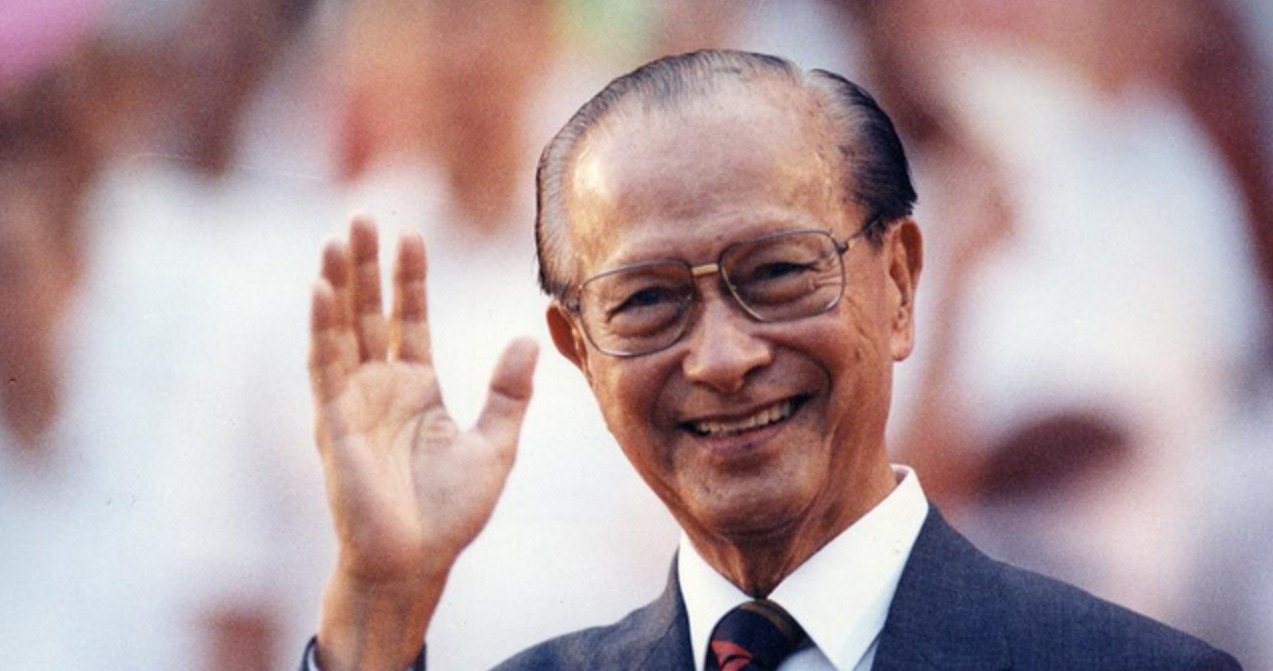
His name was Ong Teng Cheong.
He was an architect, a pianist, a union chief, a deputy prime minister, and the first president Singapore ever elected.
He won with 58.7% of the vote in 1993, spent six years discovering what the job actually meant, and died three years after leaving office.
They called him the People’s President. This is the story of why.
—————————
Ong Teng Cheong was born on January 22, 1936, the second of five children in a middle-class Singapore family.
His father was English-educated but made a deliberate choice that shaped his son’s entire life: he sent all five children to Chinese-medium schools, believing the Chinese language was essential for anyone who wanted to succeed in business.
So Ong grew up Chinese-educated in a country that ran on English.
He graduated with distinctions from Chinese High School in 1955, top of his class, but the University of Malaya taught in English and his Chinese education had no place there.
With the help of his father’s friends, he left Singapore in 1956 for the University of Adelaide in Australia.
He studied architecture. And he fell in love with a fellow architecture student named Ling Siew May, whom he’d first met at a Christmas party during their secondary school days in Singapore. They married in 1963.
But architecture wasn’t his only gift.
On August 1, 1959, as Singapore prepared for self-governance, Ong sat at a piano in Adelaide and played a recital at the Merdeka Ball celebrating the occasion. He was 23, thousands of miles from home, and marking his country’s independence through music.
He earned his Bachelor of Architecture in 1961, worked in Adelaide for two years, then returned to Singapore.
In 1965, he left again on a Colombo Plan scholarship to the University of Liverpool, where he completed a Master’s in Civic Design. He came home in 1967 as both an architect and a town planner, fluent in English, Mandarin, and Hokkien, and joined the Ministry of National Development.
Four years later, he left the civil service and started his own firm with his wife, Ong & Ong Architects.
But the pull of public life was already there.
In 1972, he was introduced to Lee Kuan Yew through grassroots work, and the PAP fielded him as a candidate in Kim Keat. He won.
What followed was a 21-year political career that touched almost every part of Singapore’s machinery.
As Minister for Communications, he became the driving force behind Singapore’s Mass Rapid Transit system.
The MRT wasn’t popular at first, and the feasibility debate went back and forth for years with serious opposition from those who favoured an all-bus system instead.
But Ong pushed, commissioned studies, visited rail systems abroad, and convinced his Cabinet colleagues that Singapore needed it.
When the first MRT train launched at Toa Payoh in November 1987, he said something that tells you everything about the man: “For me, this has been a 20-year love affair, from conception to delivery.”
He also served as Acting Minister for Culture, Minister for Labour, and in 1981 was elected Chairman of the PAP’s Central Executive Committee.
In 1983, he took over as Secretary-General of the National Trades Union Congress, the country’s largest trade union body, and held that role for a decade.
During the 1985 recession, he convinced workers that wage restraint was necessary to save jobs. It wasn’t an easy message.
But they trusted him because he’d spent years earning that trust through the unions, and the restraint worked. He became Second Deputy Prime Minister in 1985 and Deputy Prime Minister in 1990.
By 1993, Ong Teng Cheong held four of the most powerful positions in Singapore simultaneously: Deputy PM, PAP Chairman, NTUC Secretary-General, and Chairman of the Singapore Labour Foundation.
And then he gave them all up to run for president.
In 1992, the year before the election, Ong was diagnosed with low-grade malignant lymphoma. He ran anyway.
The 1993 presidential election was the first time Singaporeans could vote for their own head of state, and it mattered because the role had been redesigned. Constitutional amendments passed in 1991 gave the elected president new custodial powers over the national reserves, the power to veto government budgets that drew on past reserves, and oversight of key civil service appointments.
The presidency was no longer ceremonial.
It was supposed to be a check on the government.
Ong won with 58.7% against former Accountant-General Chua Kim Yeow, and took office on September 1, 1993.
Then came the reserves.
Ong understood his constitutional duty clearly.
He was elected to protect Singapore’s national reserves. But to protect something, you first have to know what it is and how much of it there is. So in 1996, he asked the Accountant-General for a full inventory of the government’s physical assets: land, buildings, infrastructure, everything that constituted the reserves he was supposed to guard.
The response became the most talked-about moment of his presidency.
He was told it would take 56 man-years to compile a complete valuation of all government-owned immovable assets.
The Ministry of Finance later clarified that “56 man-years” referred to the total volume of work required, not the calendar time it would take. The number could mean 56 people working for one year, or 28 working for two. Not one person working for 56 years.
But the number stuck. And the perception stuck harder.
What followed was a three-year process during which the government provided information in stages. The list, when it finally came, wasn’t complete.
Ong discussed the matter with both the Accountant-General and the Auditor-General, and eventually agreed that the government only needed to declare all its properties rather than provide a dollar-and-cents valuation of every asset. Even then, the process took years.
And there was the POSB matter.
When the Post Office Savings Bank, a government statutory board whose reserves fell under the president’s custodial authority, was sold to DBS, Ong learned about it through the press.
He wasn’t consulted, wasn’t informed in advance.
The president of Singapore found out about a major transaction involving the very assets he was elected to protect… from the newspaper.
In a 2000 interview with Asiaweek, six months after leaving office, Ong said his insistence on auditing the reserves came from a simple principle: as an elected president, he was constitutionally bound to safeguard national assets, and the only way to safeguard them was to know what they were.
Through all of this, his body was failing.
The lymphoma that had been diagnosed in 1992 returned in 1998.
And in 1999, one month before his presidential term ended, his wife of 36 years, Ling Siew May, the architect he’d married in Adelaide, the woman who’d built a firm with him and raised their two sons, died of cancer.
On July 16, 1999, Ong announced that he wouldn’t seek a second term. He stepped down on August 31, 1999, and was succeeded by S.R. Nathan.
He went back to architecture. He went back to his firm. And on February 8, 2002, Ong Teng Cheong died at the age of 66, leaving behind two sons.
———————-
He spent 21 years building things inside the system: the MRT, the labour movement, the party machinery, and the elected presidency itself. He understood how the system worked because he had helped build it from the inside.
And when the system elected him to do a specific job, he tried to do it.
Not as a rubber stamp, not as a ceremonial figure, but as someone who took the constitutional mandate seriously.
He asked the questions the role required him to ask. He pushed for information the role entitled him to have.
And the friction that resulted wasn’t because he was unreasonable or because the system was broken. It was because the system was being tested for the first time, and nobody had worked out what that test would actually look like in practice.
The architect in him must have understood that better than anyone, because you can draw a blueprint for anything, but the building only reveals its flaws when people start living in it.
He played piano.
He built the MRT.
He led the unions through a recession.
He held four of the most powerful positions in the country and walked away from all of them to become a president whose main power was to say no.
He fought cancer for a decade and lost his wife one month before his term ended. And through all of it, he kept asking the question that defined his presidency.
What are we protecting?
Ong Teng Cheong never got a complete answer.
But he made sure the question was asked, and because he asked it, every president after him inherited a system that was slightly more transparent, slightly more accountable, and slightly more honest about what the job actually requires.
There’s a mountain in Kazakhstan named after him. There’s a labour institute in Singapore named after him. There’s a music professorship at NUS in his name, and a student centre at his old school, Hwa Chong.
But the thing most Singaporeans remember is simpler than any of that.
He asked how much Singapore was worth, and it took three years to get an incomplete answer.
That tells you something about the question, and it tells you something about the man who had the courage to ask it.