The Figure, 17 April 2026
After the war, the British asked her to identify her torturers.
She'd spent 193 days in Kempeitai custody.
Electric shocks applied to her body for fifteen minutes at a time, water pumped into her until she couldn't breathe. She was made to kneel on a frame of three-sided wood with her hands and legs tied so she couldn't move, and her husband was brought into the room and forced to watch. At one point they sentenced them both to death, told them to say goodbye to each other, then revealed it was a psychological ploy to break them.
For 193 days, through all of it, she never gave up a single name.
She had every reason to point a finger. She refused.
"It's all over, finished. I don't blame the soldiers. It was the war that was wicked and evil... I shall not forget but I shall forgive."
Her name was Elizabeth Choy.
She was a schoolteacher. And what she did during the war, and what she chose not to do after it, is the most extraordinary story most Singaporeans have never properly heard.
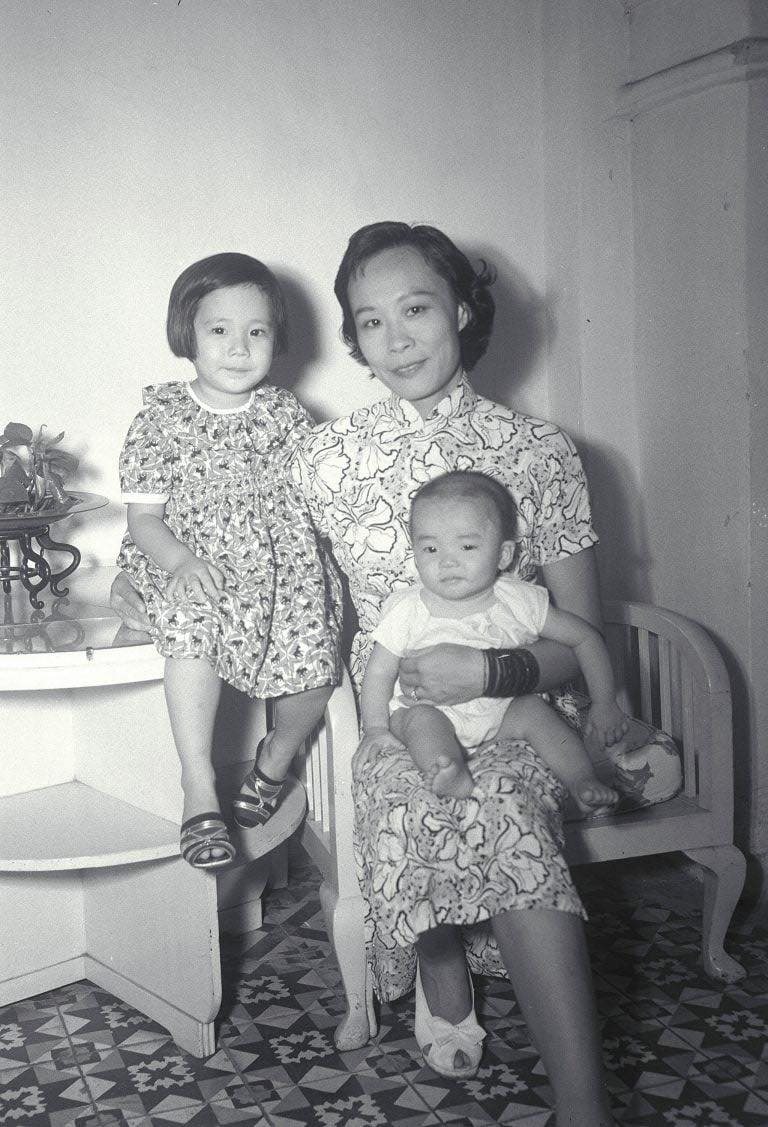
She was born Yong Su Moi on November 29, 1910, in Kudat, at the northern tip of British North Borneo, which is present-day Sabah.
Her family was Hakka Chinese, and her great-grandparents had migrated from Hong Kong to help German missionaries with their work.
Her father was a civil servant who married the daughter of a priest and was later posted to the interior, to a town called Tenom where there were no schools.
So the children were sent back to Kudat, where their grandfather ran the village school and taught in Hakka. Elizabeth was raised partly by a Kadazan nanny, and Kadazan was her first language before she ever learned English or Chinese in a classroom. She was bright. At St Monica's Boarding School in Sandakan, the teachers couldn't pronounce Chinese names, so she picked the name Elizabeth from a list. She kept it for the rest of her life.
In December 1929, she came to Singapore to study at the Convent of the Holy Infant Jesus on Victoria Street.
She shone academically, earning the Prize of Honour in her first year.
But in 1931, her mother died, and the burden of supporting six younger siblings fell on her.
So she gave up her dream of a college education and started teaching instead, first at St Margaret's School in 1933, then at St Andrew's School from 1935.
She married Choy Khun Heng on August 16, 1941, in a double wedding held alongside her brother's. And five months later, the Japanese invaded Singapore.
During the battle for Singapore, Elizabeth served as a second lieutenant in the women's auxiliary of the Singapore Volunteer Corps.
They called her "Gunner Choy."
She volunteered as a nurse too.
After the fall of Singapore in February 1942, she and her husband set up a canteen at Tan Tock Seng Hospital.
It looked ordinary. But it was a cover, and from it, they began doing something dangerous.
They smuggled food, medicine, money, messages, and radio parts to British civilian internees and prisoners of war held in Changi Prison. The system ran on a regular ambulance route, and because nobody suspected the quiet canteen operators, it worked for more than a year.
Then, in September 1943, everything changed.
A joint Australian-British commando force called Operation Jaywick slipped into Singapore harbour and sank seven Japanese ships. The Japanese were furious. They suspected the raiders had acted on intelligence sent out of Changi Prison by a hidden transmitter. On October 10, 1943, they raided the prison and seized 57 internees for interrogation in what became known as the Double Tenth Incident. Fifteen of those 57 died.
And the interrogations led the Kempeitai to the Choys. Elizabeth's husband was arrested on October 29. Elizabeth herself was lured to the Kempeitai headquarters on November 15 on the pretext of being allowed to see him. They even told her to bring a blanket for her husband. When she arrived, they locked her up.
She was held in a small cell at the old YMCA building on Stamford Road, sharing the space with up to 20 other prisoners, including men.
She and one other woman, Dorothy Nixon, were the only female detainees.
For 193 days, she was interrogated and tortured.
The Kempeitai wanted names.
They wanted to know who had helped the British, who had funded the smuggling operation, who was connected to the hidden transmitter. Elizabeth's story never changed, because she never broke.
In his affidavit at the 1946 war crimes trial, her husband described one session: "She was tied up with hands and legs to a frame kneeling on firewood. They took out two leads from a generator and applied it to her body for 15 minutes. She was screaming all the time."
But after every session, she walked back to her cell under her own power, showing nothing. Her captors noticed. One of them, Warrant Officer Monai Tadamori, later testified at the war crimes trial: "I sent away Mrs Choy. She went back with no sign of pain, just in the same spirited condition as she came in."
And in the middle of all of it, she found a way to keep her soul intact.
Bishop Leonard Wilson was imprisoned in the cell next to hers, and Elizabeth volunteered to scrub the prison floors just so she could reach his cell.
When the sentry wasn't watching, she knelt beside the bars.
The Bishop consecrated some burnt grains of rice and water from the commode, and there, in that squalor, Elizabeth Choy received Holy Communion.
She was released after 193 days.
She walked out of the YMCA building in the same clothes she'd walked in with, 193 days earlier. Her husband was held for much longer.
After the war, Elizabeth was recognised as the only local woman to have been imprisoned for such an extended period.
She was awarded the Order of the British Empire, the Girl Guides' Bronze Cross, and the Order of the Star of Sarawak. She was invited to England, where she met Queen Elizabeth and stayed for four years, studying domestic science, teaching at a London school, and posing for the sculptor Dora Gordine, who created two works from the sessions: "Serene Jade" and "Flawless Crystal."
But when she returned to Singapore in 1949, she didn't rest on her war record. She went back to teaching. And she went into politics.
And in 1951, she was nominated to the Legislative Council, becoming the first and only woman member. She used her seat to speak on behalf of the poor and needy, to campaign for social services and family planning, and to push for women's emancipation. In June 1953, she represented Singapore at the Coronation of Queen Elizabeth II.
She later stood for election in Queenstown but stepped away from politics after that, believing she could do more for the country as a teacher than as a politician.
In 1956, she became the first principal of the Singapore School for the Blind. She returned to St Andrew's Junior School and taught there until her retirement in 1974.
She adopted three daughters. She continued visiting schools well into her 90s, talking to young Singaporeans about the importance of national defence. And she carried one scar from the war that never healed. A lifelong fear of electricity. After what the Kempeitai did to her, she couldn't bring herself to turn on a switch.
But it was the only thing about the war she let control her.
Elizabeth Choy died on September 14, 2006, at the age of 95, at her home on MacKenzie Road.
She'd been diagnosed with pancreatic cancer one month before.
A 1997 exhibition at the Singapore History Museum was titled "Elizabeth Choy: A Woman Ahead of Her Time," and it was considered unique for being dedicated to a living woman in Singapore history. Her life was adapted into a stage play called "Not Afraid to Live, Not Afraid to Remember." Her clothes from the YMCA building are on display at the National Museum of Singapore.
==================================
Imagine this...
She was tortured for 193 days and never gave up a name.
She was asked to identify her torturers and refused. She spent the rest of her life teaching children, serving the blind, fighting for the poor, and visiting schools to talk about what courage actually looks like when it's tested.
She didn't build an empire.
She didn't accumulate wealth.
She didn't hold power for decades.
She held something harder than any of those things. She held her silence when speaking would have ended her pain, and she held her forgiveness when vengeance would have been understood by everyone.
The woman who was tortured with electricity became afraid of light switches for the rest of her life. But she was never afraid of anything else.
"I shall not forget but I shall forgive."
Elizabeth Choy. Schoolteacher. War heroine. The bravest person in the history of Singapore that most Singaporeans can't name.
Remember her.