The Figure, 12 February 2026
There was a time when Singapore’s rivers were so filthy that fish couldn’t survive...and one man was given ten years to fix what looked unfixable.
Most people today have no idea who he was.
His name was Lee Ek Tieng.
And if he had failed, Singapore would not look... or smell ...the way it does today.
When Lee Ek Tieng entered public service, Singapore was not the polished city people now hold up as a model. It was crowded, vulnerable, and improvising its way through survival. Sewage ran untreated. Waste was dumped where it could be hidden. Rivers functioned as open drains because there was no better option.
This wasn’t an environmental problem in the abstract.
It was a public health risk.
A dignity problem.
A ticking clock.
Lee, trained as a civil engineer and public health specialist, saw the danger early. He understood that cities rarely collapse from headline disasters. They decay from things no one wants to look at ...waste, water, pollution ...until it’s too late.
So he started where most leaders don’t want to.
Underground.
As a young engineer in 1958, Lee drafted Singapore’s first Sewerage Master Plan, mapping how waste would be collected, treated, and removed before disease and stench overwhelmed the city. It was technical, unglamorous work. No speeches. No applause.
Just pipes, treatment plants, and hard choices.
When he became the first head of the Anti-Pollution Unit in 1970, the “unit” consisted of three people. That was Singapore’s entire environmental defence. Lee studied pollution control abroad, returned, and began pushing ideas that were expensive, disruptive, and deeply unpopular ...centralised sewage treatment, strict waste controls, long-term infrastructure spending with no immediate payoff.
He pushed anyway.
In 1972, Lee became the first Permanent Secretary of the Ministry of the Environment, and the pace accelerated.
He ordered a nationwide sewage network to replace the old “night soil” system. He demanded the construction of four new sewage treatment plants. Over the next eight years, Singapore spent S$1.8 billion rebuilding its sewerage system...a staggering sum for a young nation.
He also lobbied for waste incineration, approving Singapore’s first incineration plant in 1973 ...the first in Asia outside Japan.
No one celebrated these decisions.
But cities that don’t make them rot.
Then came the challenge that would define his legacy.
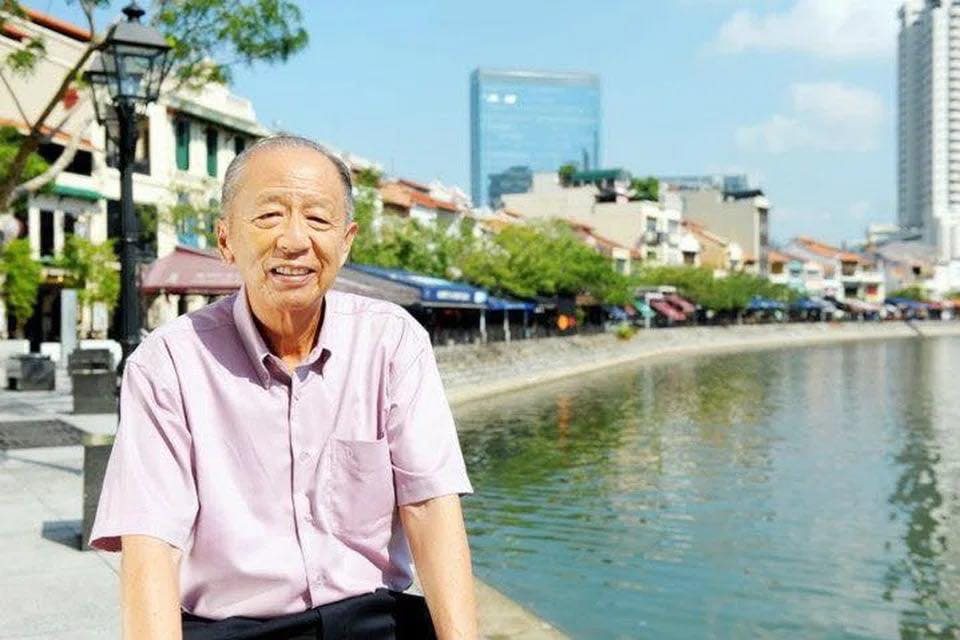
In 1977, Prime Minister Lee Kuan Yew publicly challenged Lee Ek Tieng to clean up the Singapore River and Kallang Basin within ten years. At the time, the rivers were biologically dead. The stench hung in the air. The idea that they could be restored sounded almost naïve.
Lee didn’t argue.
He didn’t hedge.
He executed.
Bumboats were banned. Hawkers and squatters relocated. Industries cleaned up or shut down. Contractors dredged the riverbed, removing a metre of toxic sludge and replacing it with sand.
Within one week, the smell disappeared. By the time the project ended ...at a cost of S$300 million ...fish had returned to the river.
In 1987, a Clean River Commemoration was held. Lee Ek Tieng and his team were each presented with a solid gold medal, as promised.
Lee Kuan Yew later wrote: “There would have been no clean and green Singapore without Lee Ek Tieng.”
That wasn’t praise.
It was a diagnosis.
While overseeing the river cleanup, Lee also took charge of the Public Utilities Board, where he confronted an even quieter threat: water insecurity.
Singapore could not survive if it depended entirely on others for water.
Together with Tan Gee Paw, Lee helped craft Singapore’s first water master plan, insisting the country must be at least 75% self-sufficient. When water reclamation technology was too expensive, he focused on reservoirs. When the technology matured, he greenlit advanced treatment using microfiltration, reverse osmosis, and ultraviolet radiation.
But Lee understood something engineers often forget.
People don’t drink equations.
They drink stories.
So he gave reclaimed water a name that removed fear before it arose: NEWater.
“New” was neutral. It didn’t describe the source. It invited curiosity instead of disgust.
Today, NEWater is studied worldwide.
At the time, it was a psychological gamble.
Lee’s career later extended into finance and governance ...the Ministry of Finance, MAS, Temasek, GIC, and eventually head of the Singapore Civil Service.
But his instinct never changed.
Find the weakest point.
Fix it early.
Build systems that don’t depend on hope.
Even after retirement, he warned against complacency. He worried that the civil service had grown too cautious, too elitist, too afraid to speak truth upward. And when he misspoke publicly, he did something rare.
He clarified.
He retracted.
He took responsibility.
Not to protect image ...but to protect trust. This is what makes Lee Ek Tieng exceptional. He didn’t inspire crowds. He removed failure modes.
He didn’t chase popularity.
He chased durability.
He understood that real progress often smells bad before it looks good ...and that leadership sometimes means walking straight into the mess everyone else avoids.
Cities don’t survive because of grand visions alone. They survive because someone is willing to clean what everyone else ignores.
The pipes beneath your feet.
The water in your glass.
The river that no longer stinks.
You don’t notice them.
And that’s the point.
Because the highest form of leadership doesn’t announce itself.
It works ...so that nothing else has to go wrong.