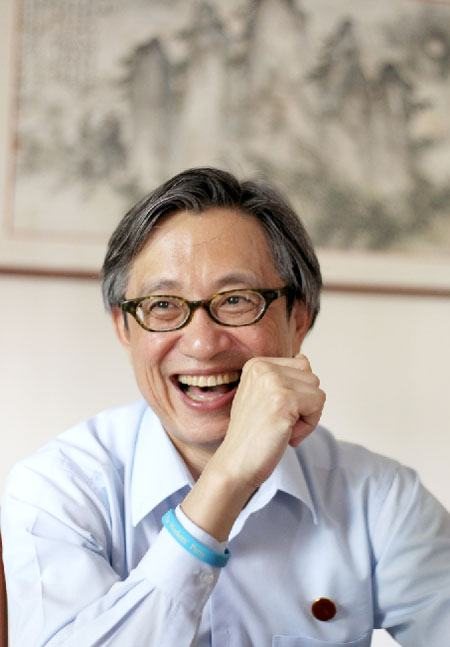
The Figure, 8 July 2026
In 1979, Chen Show Mao was the top student in Singapore's A-level examinations.
Number one in the country. He outperformed Vivian Balakrishnan and Lui Tuck Yew, two classmates who would go on to become PAP ministers and hold some of the most powerful portfolios in government.
Then he applied to the medical school at the National University of Singapore.
He was rejected.
The top A-level student in Singapore could not get into his own country's medical faculty. The Straits Times ran a story about it in May 1981 under the headline: "Top scholars who can't get into medical faculty."
He applied to Harvard. They said yes.
That sequence tells you everything you need to know about the next forty years. A system that couldn't find room for its own best student. A young man who went looking for room elsewhere. And a return, three decades later, that nobody expected to go the way it did.
Chen Show Mao was born in Pingtung County, Taiwan, in 1961. His father was a trader. His mother was an elementary school teacher. He moved to Singapore when he was eleven.
He studied at Nanyang Primary School, Catholic High School, Anglo-Chinese School, and National Junior College, where he was president of the students' council. Top student at A-levels. Then rejected from NUS Med.
So he went to Harvard and studied economics. Graduated in 1986. Won a Rhodes Scholarship to the University of Oxford, where he earned a Master of Arts at Corpus Christi College. Then Stanford Law School, where he completed a Juris Doctor in 1992.
Harvard, Oxford, Stanford.
Three of the most competitive institutions on earth. The boy who wasn't good enough for NUS Medical School turned out to be good enough for all three.
Between 1980 and 1983, before Harvard, he served National Service. As a permanent resident, not a citizen. Infantry platoon commander at the 5th Singapore Infantry Regiment. Brigade adjutant at the 3rd Singapore Infantry Brigade headquarters.
He did NS for a country he hadn't yet become a citizen of. He became one in 1986.
After Stanford, he joined Davis Polk & Wardwell, one of the most prestigious corporate law firms on Wall Street. He practised in New York, then Hong Kong, then Beijing, where he became the managing partner of the firm's China office.
In 2010, American Lawyer named him one of their "Dealmakers of the Year." That's one of the highest professional honours in international corporate law.
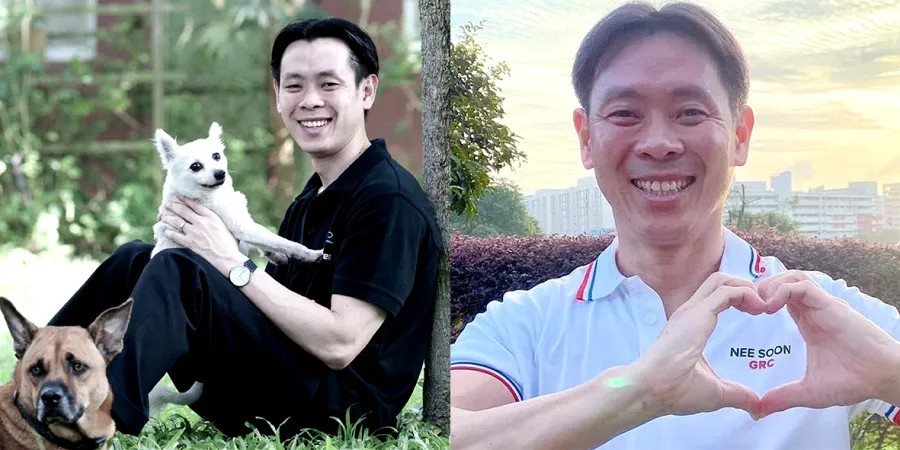
By any measure, Chen Show Mao had built a career that would make any country proud. Harvard, Oxford, Stanford, Davis Polk, Dealmaker of the Year. A Taiwanese-born Singaporean who'd been turned away from NUS Med and had responded by conquering every institution that would let him in the door.
Then he came home and joined the opposition.
In March 2011, the Straits Times reported that the Workers' Party had a potential star candidate. The news travelled across legal circles from Beijing to New York. A Davis Polk partner running for Parliament. In Singapore. For the opposition.
On May 7, 2011, he stood as part of the five-member WP team for Aljunied GRC alongside Low Thia Khiang, Sylvia Lim, Pritam Singh, and Muhamad Faisal Manap.
They won. 54.72%. The first GRC ever taken by the opposition.
Chen Show Mao became the first foreign-born opposition MP in Singapore's history. The Washington Post wrote about it. International media noticed. The most credentialed opposition candidate the country had ever produced had just helped deliver the biggest electoral upset since independence.
And then came the question that nobody writes about but everyone thinks.
What happened next?
In Parliament, Chen spoke thoughtfully but slowly.
Observers noted that his pace and delivery didn't match the adversarial rhythm of the Chamber.
On more than one occasion, his own Secretary-General, Low Thia Khiang, had to step in to clarify or expand on his points. He was effective in committee work and in policy papers, particularly on the Population White Paper, where he proposed capping foreign workforce growth. But the parliamentary floor, where perception is formed, was not where his strengths landed.
He was a dealmaker, not a debater.
A boardroom operator, not a rally speaker.
And Singapore's political system rewards the debater.
In 2015, Aljunied GRC survived by 1.9%. The slimmest margin in the country. 2,612 votes separated the WP from losing everything they'd won in 2011. The team held, but the signal was clear: the magic of 2011 had thinned.
In May 2016, Chen Show Mao challenged Low Thia Khiang for the position of Secretary-General of the Workers' Party.
He lost.
The details are internal. But the challenge itself is public record. The most credentialed member of the party tried to lead it and the party chose to stay with the man who'd built it from the ground. Low, the Chinese-educated teacher who wanted to write newsletters. Over Chen, the Rhodes Scholar who'd run a Wall Street office in Beijing.
Credentials versus institution. The party chose the institution.
Then came the AHTC lawsuits. Chen was named as a defendant alongside Low, Sylvia Lim, and Pritam Singh. The legal proceedings dragged on for years, consuming resources and political oxygen.
In 2020, he stepped down from Parliament. He did not contest GE2020. He was replaced on the Aljunied slate by Gerald Giam and Leon Perera. He departed alongside Low Thia Khiang and Png Eng Huat, part of a generational transition, but whether the departure was entirely voluntary has never been publicly clarified by the party.
Nine years. One historic victory, one near-loss, one leadership challenge, one set of lawsuits, and a quiet exit.
The Chen Show Mao story is one of the most uncomfortable stories in Singapore politics.
Not because anything went wrong in any dramatic or scandalous way. But because it forces a question that Singapore, a country obsessed with credentials, doesn't like to sit with.
What if the best resume in the room doesn't produce the best results?
He had Harvard, Oxford, Stanford, and Davis Polk. He had Dealmaker of the Year. He had the most impressive pre-politics CV of any opposition candidate in history.
And the man who outperformed him in the party, who built the institution Chen tried to lead, was a Chinese-educated teacher from Chung Cheng High School who'd been rejected from political science for his poor English.
Low Thia Khiang didn't have a single credential that matched Chen Show Mao's.
He had something else.
He had Hougang.
Twenty years of void decks and funeral wakes and fax notes to his wife. The kind of capital that no university can issue and no law firm can teach.
If you've ever hired someone with a perfect resume and watched them struggle in a role that required a different kind of intelligence, you know this story.
If you've ever been outperformed by someone with half your credentials and twice your ground sense, you know it too.
Chen Show Mao was the most qualified opposition politician Singapore has ever produced.
Whether he was the most effective is a question the country is still quietly asking.