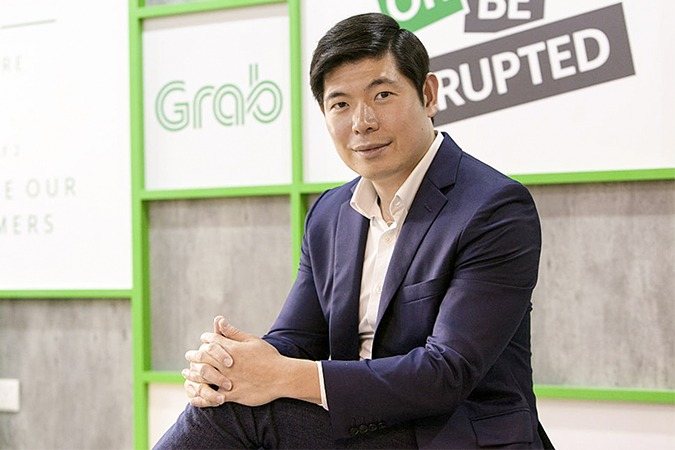
Founders, 25 May 2026
His great-grandfather was a taxi driver.
His grandfather took that knowledge and built Tan Chong Motor, becoming the exclusive distributor for Nissan in Malaysia.
His father, Tan Heng Chew, grew it into one of the country's largest automotive companies, listed on the Kuala Lumpur Stock Exchange.
Anthony Tan, the youngest of three sons, walked away from all of it.
That's the detail most people miss about Grab.
This isn't a scrappy underdog story but the story of someone who had everything handed to him and chose to start from scratch anyway.
It's the story of someone who had everything handed to him and chose to start from scratch anyway. "You might call me a rebel without a cause," he said. "But I was on a mission to create something that could be a force for good."
Tan was born in 1982 in Kuala Lumpur.
He grew up in the kind of privilege that most people in Southeast Asia can only imagine.
But even inside that privilege, his father put him to work early.
The boy spent time on the assembly line at Tan Chong Motor, attending meetings with union bosses before he was old enough to drive.
By 11, he was running his first business, buying and selling X-Men comics for cash in the schoolyard. The instinct was always there.
He studied economics at the University of Chicago, then joined the family business as head of marketing.
The path was clear: learn the business, rise through it, inherit it. That's how dynasties work. That's what the family expected.
He went to Harvard Business School in 2009, and the path broke.
He met Tan Hooi Ling in a class called "Business at the Base of the Pyramid."
They sat next to each other.
They became friends.
They were both Malaysian.
And one day, a classmate said something to Anthony that he couldn't unhear: "Your great-grandfather was a taxi driver, your grandfather started the Japanese automotive industry in Malaysia, but your female friends suffer safety issues when taking a taxi. Why don't you do something about it?"
That taunt became a business plan. Anthony and Hooi Ling designed an app that would connect taxi passengers directly with registered drivers, solving for safety, reliability, and transparency in a Malaysian taxi system that was notorious for all three.
They entered the plan into a Harvard startup competition, finished as first runner-up, and took home US$25,000 in seed money.
In June 2012, they launched MyTeksi in Kuala Lumpur.
Anthony was 30. He had left the family business.
His father was not enthusiastic. "He didn't disown me the last time I checked," Anthony told the Malay Mail. "Building something from scratch from just a PowerPoint and seeing the lives we affect is a lot more rewarding."
That quote tells you exactly where the tension sat.
A son walking away from a family empire to build something that hadn't proven it could work, armed with $25,000 and a PowerPoint deck.
The early years were relentless.
Anthony has spoken about working 15 to 20 hours a day, seven days a week. MyTeksi became GrabTaxi, then simply Grab, expanding from Kuala Lumpur to Singapore, then across Southeast Asia: Philippines, Thailand, Vietnam, Indonesia, Myanmar, Cambodia.
In 2014, SoftBank invested US$250 million, and the business changed permanently. By that point, Grab was processing an average of six bookings per second.
In 2018, Grab acquired Uber's entire Southeast Asian operations, a move that eliminated its biggest competitor and consolidated Grab's dominance across the region.
Uber took a 27.5% stake in Grab as part of the deal. Southeast Asia was Grab's, and Uber had conceded the battlefield.
The company kept expanding well beyond rides into GrabFood, GrabPay, GrabExpress, GrabMart, and eventually a digital banking licence in Singapore, making Grab one of the region's first super-apps.
By 2023, Grab was generating over US$2 billion in annual revenue, serving 35 million customers and providing 13 million gig jobs across eight countries.
In December 2021, Grab went public on the Nasdaq through a SPAC merger with Altimeter Growth Corp, raising US$4.5 billion in the largest-ever US public listing by a Southeast Asian company. The bell-ringing ceremony was held in Singapore.
The stock crashed, falling roughly 75% from its listing price over the following year as Grab burned cash and the market punished it.
Anthony stayed, restructured, cut costs, and in late 2023 Grab reported its first-ever quarterly profit.
================
Anthony Tan's story is unique.
Anthony Tan had the biggest fallback in Malaysian business.
A family automotive empire.
A guaranteed seat at the top.
A future that required nothing more than showing up and inheriting.
He left anyway, not because he was desperate but because a classmate at Harvard pointed out that the grandson of a man who started an automotive empire was sitting in a classroom while women in his home country couldn't get a safe taxi ride.
That's conviction.
The belief that the problem was worth more than the inheritance.
Four generations of Tans. A taxi driver, a car dealer, an automotive president, and a son who came full circle and built the app that made taxis work for the people his great-grandfather once drove.