The Figure, 13 February 2026
There’s a reason Changi Airport works the way it does and it has nothing to do with architecture or luck.
It comes down to one man who obsessed over things most people would dismiss as trivial.
His name was Sim Kee Boon.
And if you’ve ever breezed through Changi without thinking about it ...that was the point.
Sim Kee Boon didn’t look like a man who would redefine global standards.
He wasn’t an aviation expert.
He wasn’t a charismatic visionary.
He didn’t arrive with a grand airport blueprint under his arm.
When he was asked to oversee the construction of Changi Airport ...the largest civil project Singapore had ever attempted ...he openly admitted something most leaders would never say:
He didn’t know how to build an airport.
So he did something far more dangerous than pretending.
He asked questions.
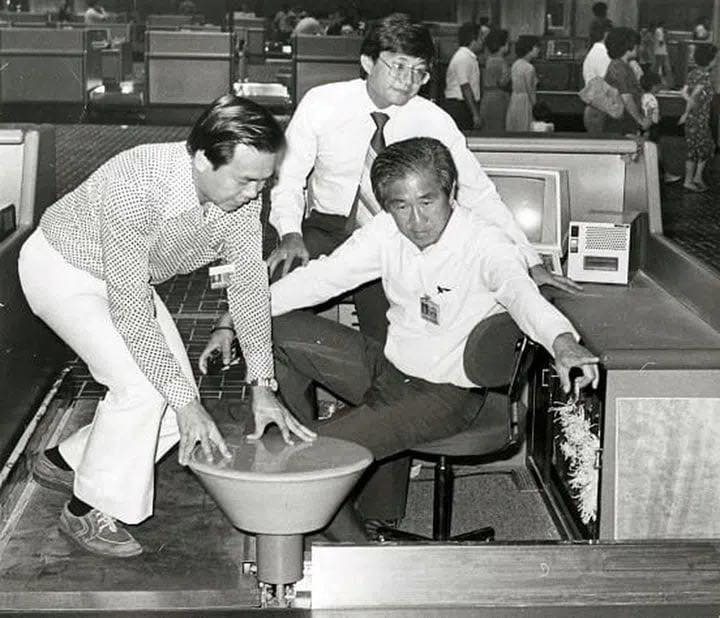
By the mid-1970s, Singapore was betting its future on connectivity. But Changi wasn’t just about planes and runways. It meant land reclamation on a massive scale. It meant resettling squatters. It meant coordinating dozens of agencies, contractors, regulators, and operators ...all with different incentives and priorities.
Most projects of this scale fail not because of one big mistake, but because of a thousand small ones no one owns.
Sim owned them.
He drilled into details others waved away. He listened closely to officers and staff who actually ran the systems. And once he understood how the parts fit together, he became relentless about standards.
Not abstract standards.
Operational ones.
This is where his fingerprints become unmistakable.
Sim introduced free local phone calls in the transit area ...not as a gimmick, but because waiting without information creates stress. He imposed the now-legendary “12-minute rule”: the first bag must appear on the carousel within 12 minutes after an aircraft stops.
Twelve minutes.
Not “as soon as possible.”
Not “industry benchmark.”
Twelve.
Why?
Because excellence lives in constraints you can measure.
And because no single organisation could meet that target alone.
Sim insisted that aviation authorities, immigration, customs, retailers, and eateries function as one system, not separate silos. Changi wouldn’t succeed unless everyone won or lost together.
That thinking turned an airport into an experience.
And an experience into a reputation. After Changi, Sim was handed another problem most people wanted to avoid. Keppel Shipyard was losing money. The safe move would have been to wind it down quietly. Cut losses. Move on. That was Sim’s initial instinct. Then he paused.
And changed his mind.
Instead of retreating, he doubled down on reinvention. He continued the diversification strategy started by his predecessor ...expanding Keppel into engineering, property, financial services, and shipyards overseas.
Within five years, Keppel was growing again.
Not because of a single bold bet ...but because Sim understood something fundamental:
Decline isn’t reversed by optimism.
It’s reversed by structure.
What’s striking about Sim Kee Boon’s career isn’t the scale of what he touched ...it’s the consistency of how he approached problems.
He didn’t chase applause.
He didn’t romanticise transformation.
He didn’t confuse vision with execution.
He believed that if you get the systems right, outcomes follow. And if you don’t, no amount of branding will save you. Outside of public service, Sim helped found Tanah Merah Country Club, driven simply by a love for the game he shared with his wife, Jeanette. Even there, those who knew him noticed the same traits: attention to detail, fairness, and long-term thinking.
He battled stomach cancer for 17 years before passing away in 2007.
Quietly.
Without fanfare.
The lesson most people miss
Changi Airport isn’t world-class because it looks good in photos. It’s world-class because someone obsessed over baggage belts, phone calls, coordination, and minutes most people wouldn’t bother counting. Keppel didn’t survive because of hype.
It survived because someone refused to accept decline as inevitable.
Sim Kee Boon reminds us that the leaders who change outcomes most profoundly are often the least visible.
They don’t sell inspiration.
They build reliability.
And in a world addicted to big speeches and bold promises, that kind of leadership might be the rarest asset of all.
You don’t notice it when it works.
But the moment it’s gone ...everything breaks.