The Figure, 16 February 2026
He once earned about $1,000 a month tutoring JC students just to pay his own university fees.
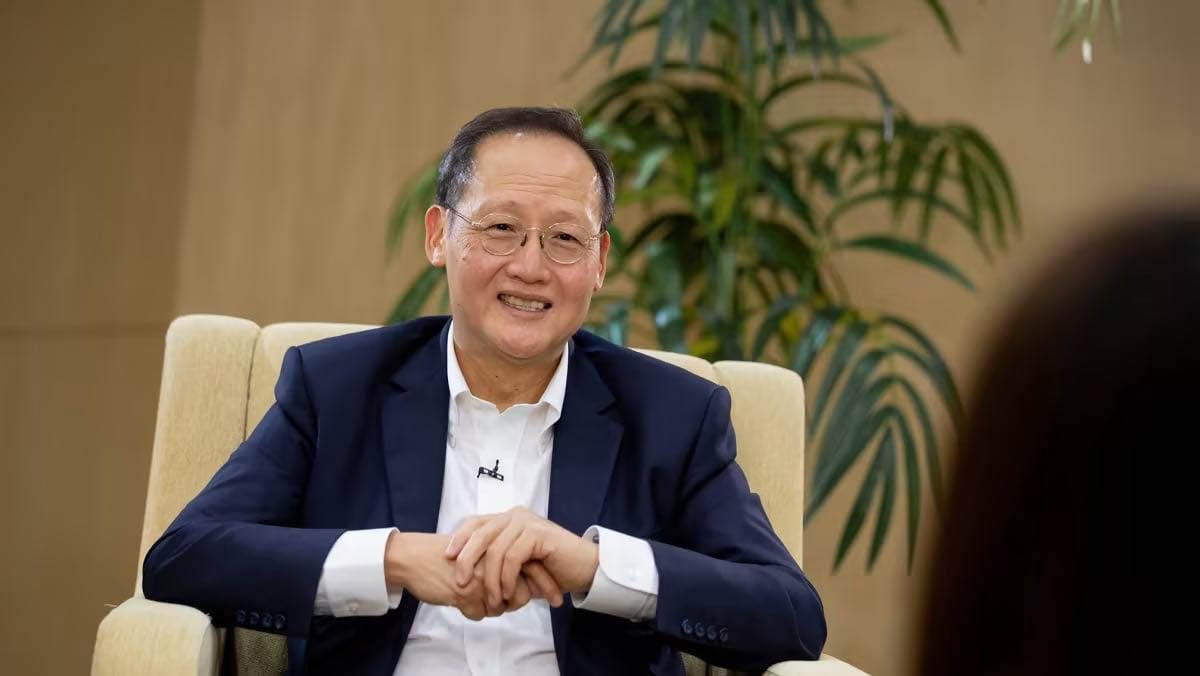
Today, he shapes the manpower policies of an entire country.
That trajectory didn’t happen by accident.
Before he became Singapore’s Minister for Manpower… before he oversaw national debates on jobs, foreign workforce policies and labour strategy… before he took on Energy and Science & Technology…
Tan See Leng was a student doing whatever it took to stay in school.
S$3,000 a year in fees may not sound like much today. But when you’re funding it yourself ...no rich uncle, no family cushion ...it becomes real money.
So he tutored.
Math. Biology. Physics. Chemistry.
Up to eight students at a time.
He earned around S$800 to S$1,000 a month. Enough to survive. Enough to stay enrolled. But only if he kept grinding. That experience matters. Because when you’ve had to calculate your own runway at 19, you don’t romanticise risk later in life.
He wasn’t originally on the medical track.
He had a scholarship to study the humanities. Then his mother fell seriously ill and went into a coma. That kind of moment forces decisions. He switched paths. Entered medicine. Not because it was prestigious ...but because it was practical and purposeful.
He graduated from NUS Medicine in 1988. Completed a Master of Medicine in family medicine. Later, an MBA from the University of Chicago Booth School of Business. Clinical depth. Business discipline. That combination would shape everything that followed.
At 27 years old, he borrowed money.
Not seed funding from venture capitalists.
A bank loan.
With S$5,000 from each stakeholder and a S$90,000 loan, he co-founded Healthway Medical Group.
If it failed, the debt was personal. Healthway grew to become the second-largest private primary care group in Singapore. In 2004, he successfully divested it. Most people would have called that a peak.
He didn’t.
Tan joined Parkway Holdings and eventually became Group CEO of Parkway Pantai and Managing Director of IHH Healthcare. Under his leadership, the group expanded from 15 hospitals in 2009 to 84 hospitals across multiple countries by 2019. He oversaw major acquisitions in Turkey and India. He navigated one of the world’s largest IPOs in 2012 when IHH Healthcare was relisted. He moved healthcare from a local network into a multinational platform.
That’s not incremental growth.
That’s structural scaling.
Then came the pivot few expected.
In 2020, he entered politics.
Not as a career insider. Not as someone who had spent decades climbing party ranks. He stepped into Marine Parade GRC and won about 57% of the vote.
Soon after, he became Minister for Manpower. And here’s where the transition becomes more than symbolic. Manpower policy sits at the intersection of anxiety and aspiration.
Local jobs.
Foreign talent.
Wages.
Competitiveness.
Social cohesion.
Tan has consistently argued that attracting global talent is not a zero-sum game...that done properly, it creates opportunities rather than removes them.
It’s a position that invites scrutiny. And he has faced it.
In 2025, during a heated parliamentary exchange over employment data transparency, he quoted a Cantonese movie line ...sparking debate over tone, language and parliamentary decorum. Leadership in the public arena magnifies every word.
But what’s interesting is this...
- He didn’t enter politics insulated from consequence.
- He came from payroll decisions, expansion risks, and hospital balance sheets where mistakes had financial gravity.
- That shapes how you think about labour markets.
In 2025, he took on an additional portfolio: Minister-in-Charge of Energy and Science & Technology.
That’s not a small assignment.
Energy security and innovation ecosystems are long-horizon bets. They require capital discipline, systems thinking and strategic patience ...the same muscles he built in healthcare.
There’s a through-line in Tan See Leng’s story.
From tutoring students to pay for school.
To borrowing money to start a clinic.
To running a global healthcare network.
To shaping national workforce policy.
Whether you agree with every position he takes or not, the arc is undeniable.
It’s not a story of entitlement.
It’s a story of escalation.
Each stage required stepping into something bigger than before...financially, operationally, politically. For the common man on the street, that first image matters most. A young student, calculating tuition hours to pay fees.
Because leadership feels distant...until you remember it often starts there.
Not with power.
With pressure.
And sometimes the best indicator of how someone will handle national responsibility…is how they handled personal responsibility when no one was watching.