The Origin, 7 September 2026
In 1957, eight human skulls and almost a hundred bones were discovered in a creek on a small island off Singapore's southern coast.
They were thought to be the remains of Chinese men who had worked for the Singapore Harbour Board.
Nobody could say for certain how they had died.
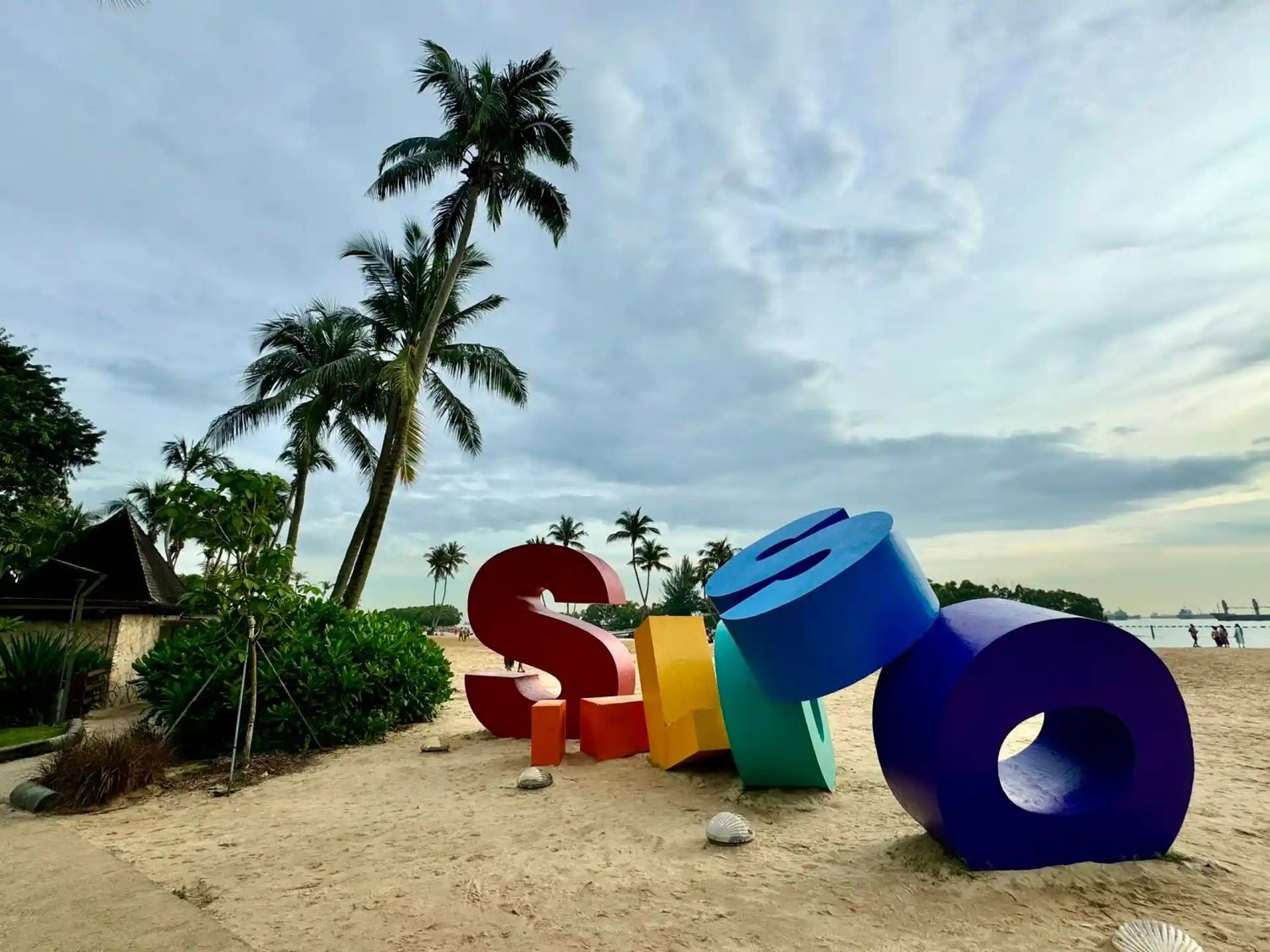
The island was called Pulau Blakang Mati. In Malay, that means Island of Death from Behind. Today, millions of tourists visit it every year.
They know it as Sentosa.
The name Blacan Mati appears on a Portuguese map dated 1604. Nobody is entirely sure how the island earned it.
The theories are all unpleasant.
One traces it to piracy and bloodshed along the harbour approach. Another links it to the spirits of Malay warriors said to be buried on the neighbouring island of Pulau Brani.
A third points to a devastating fever outbreak in the 1840s, likely malaria, that killed roughly three-quarters of the men at a signal station and left the island nearly abandoned.
But here's the twist that makes the name more mysterious, not less. That fever outbreak happened in the 1840s.
The name was already on a map in 1604.
Whatever gave the island its reputation for death, it happened at least two centuries before the most commonly cited explanation.
Three centuries of theories. All of them involve death. None of them fully account for a name that was already old when the British arrived.
In 1878, the British built a fortress on it.
Fort Siloso was constructed on Mount Siloso to protect the western entrance to Keppel Harbour. The mountaintop was blown flat to make room for the gun platforms.
Two more fortifications followed: Fort Connaught from the same year, and Fort Serapong, operational by 1887. By the 1890s, the island bristled with coastal artillery, including seven-inch and ten-inch guns, positioned primarily to repel a naval attack from the sea.
When the Japanese invaded in 1942, they came by land, down through the Malay Peninsula. The coastal guns were turned inland and fired at Japanese positions around the western coast. But they couldn't stop what was coming.
Singapore fell.
During the Occupation, the island was given a new name and a new identity.
The Japanese called it Kashima, Island of Deer.
They built a Shinto shrine called Kashima Jinja in 1943 and reportedly brought deer from Java, because deer were regarded as messengers of Shinto deities.
The shrine was probably destroyed by the Japanese themselves as British return became imminent in 1945. Its precise location is now unknown.
But the darker history of the Occupation left marks that couldn't be erased so easily.
The island housed a prisoner-of-war camp holding about a thousand British and Australian soldiers.
NHB recognises Sentosa as one of the places where Sook Ching killings are believed to have taken place. Wartime accounts describe bodies from executions drifting through Keppel Harbour and washing ashore on the island's beaches.
Captured soldiers buried them.
The bones found in that creek in 1957 were suspected to be harbour workers, not massacre victims. But the island didn't distinguish between its dead. It held them all.
After the war, the British came back. Then they left. Then the island nearly became an oil refinery.
This is the part almost nobody knows.
By 1967, the Singapore government had approved an agreement with Esso to build a petroleum complex on Pulau Blakang Mati, with plans to expand it into a full petrochemical hub.
Then Albert Winsemius, a Dutch economist who served as Singapore's chief economic advisor, intervened.
Together with Alan Choe, the head of the Urban Renewal Unit, Winsemius argued that Singapore would eventually reach full employment and need recreational land close to the city. A refinery there would attract pollution complaints and limit the island's future value. He negotiated directly with Esso executives in New York, and the refinery was redirected to Pulau Ayer Chawan off Jurong, now part of Jurong Island.
If Winsemius had been less determined, Siloso Beach would smell like crude oil and Universal Studios would be a tank farm.
By 1969, the resort vision had won. But an island meant to attract holidaymakers had a branding problem.
You can't market "Island of Death from Behind" to tourists.
In November 1969, a public competition was launched. The winning entry was "Sentosa," a Malay word derived from Sanskrit, meaning peace and tranquility. The S$500 prize was split equally among the winners.
Here's the detail that stops you. Five different people submitted the same name. Independently. Five separate entrants, working alone, all reached for the same word to replace centuries of death with peace.
The island was officially renamed in September 1970.
The Sentosa Development Corporation was established in 1972. The cable car began operating in 1974. Fort Siloso reopened as a visitor attraction in 1975.
A monorail was added in 1982. Layer by layer, the island was wrapped in leisure until the history underneath was no longer visible.
But it's still there.
Somewhere on the transformed island is the creek that yielded eight skulls in 1957.
The historical accounts record the discovery.
They don't tell today's visitor where to stand.
The colonial barracks are scattered across the island, some repurposed, some crumbling. Fort Siloso still sits on the northwestern tip, preserved as a museum.
And more than 8,000 people now live at Sentosa Cove, one of the most expensive residential enclaves in Singapore.
Their homes sit on an island that spent more than three centuries being called Death from Behind, was one of the most heavily fortified points in Singapore yet still witnessed the island's surrender, housed prisoners who buried massacre victims on its beaches, and was nearly turned into a petroleum complex.
They call it home. The name means peace.
Three names capture the island's most dramatic identities.
Pulau Blakang Mati. Island of Death from Behind. Documented since 1604.
Kashima.
Island of Deer.
For 3 years under Japanese occupation.
Sentosa.
Peace and Tranquility.
For the last 56 years.
Each name laid on top of the last like a coat of paint over a wall that still holds the shape of what was there before.
You can ride a roller coaster on the same island where soldiers buried massacre victims on a beach. You can eat dinner at a resort that exists only because a Dutch economist flew to New York and talked an oil company out of building a refinery here.
The island that was named for death was renamed for peace by five people who didn't know they were thinking the same thing.
That's Sentosa.
That's always been Singapore.
Build forward.
Rename what you have to.
And trust that the new name will eventually become the only one anyone remembers.