Founders, 27 April 2026
His first company failed.
His second company sold for US$66 million.
And with the money from the second, he backed a motorcycle taxi app in Jakarta that became one of the largest tech companies in Southeast Asian history.
Hian Goh studied law at Trinity College, Oxford.
He went into investment banking, first at SG Warburg in London (now UBS), then at Salomon Smith Barney in Singapore (now Citi), advising technology and media companies on deals.
It was a safe, well-paying career. He walked away from it in 2001 to start a call centre in Guangzhou called RICC.
The idea was smart: hire Cantonese speakers in southern China to serve Hong Kong customers over internet phone lines. It worked. For about 18 months. Then the big players showed up with 2,000-seat operations and technology his 150-person shop couldn't match.
RICC was gone by 2003.
He came back to Singapore wondering if he'd made the worst decision of his life.
He'd left a career most people would kill for, bet on himself, and lost. He didn't know if he could go back to banking or if anyone would take him seriously again.
So he did something that most people in his position wouldn't do.
He went back to school.
He enrolled in an MBA at INSEAD, not because he wanted another credential, but because he needed to figure out what to do next.
And it was at INSEAD, while studying the media industry, that he noticed something nobody else was paying attention to: cable TV operators across Southeast Asia were desperate for content. America had Food Network. Asia had nothing.
He called his friend Maria Brown, a producer who'd spent 14 years at the BBC.
Together, in 2005, they launched the Asian Food Channel, the first food television channel to broadcast across the region.
They started with almost no original content, licensing shows from overseas and filling airtime with whatever they could find. Then they built a studio at Orchard Central and started producing their own shows. The channel grew from a tiny experiment into a regional brand that reached 130 million viewers in 12 countries.
In April 2013, Scripps Networks Interactive, the American company that owned Food Network, bought AFC for US$66 million. They were buying the Asian version of their own flagship channel.
From a failed call centre in Guangzhou to a US$66 million exit in Singapore, eight years of building, grinding, and figuring it out as he went.
After the sale, Hian started writing small cheques into startups. And he kept noticing the same problem: young companies in Southeast Asia could find small amounts of money to get started, and big companies could find private equity backing, but there was almost nothing in the middle.
The gap between "we have an idea" and "we need to grow" had no money in it.
He teamed up with Shane Chesson and co-founded Openspace Ventures, a fund designed to fill exactly that gap. And then he made the bet that would define this chapter of his career: he led the first major funding round for Gojek, the Indonesian motorcycle taxi company founded by Nadim Makarim.
Hian has said publicly that meeting Nadim was instant recognition: "If you ever meet Nadim, he's got the most amount of charisma. It was very clear from day one that Nadim was exceptional."
Gojek became GoTo Group, one of the biggest tech companies Southeast Asia has ever produced.
Openspace went on to back Love Bonito, Lucence, and dozens of others across the region.
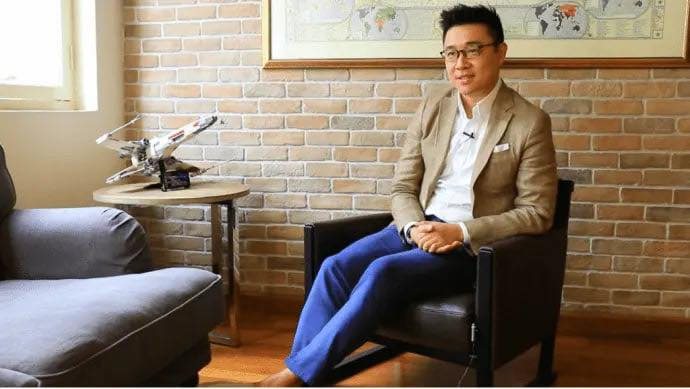
Hian Goh...
He's sat on both sides of the table, and that's what makes him different from most investors in this part of the world.
He's been the person pitching investors, raising money, building a team, running out of options, and eventually selling.
And he's been on the other side, deciding whether to back someone else's dream. He knows what it feels like to fail because RICC failed. He knows what it feels like to doubt yourself because he came home from Guangzhou not knowing what to do next. And he knows what it feels like to build something that works because AFC worked.
That combination is what founders trust, not the Oxford degree or the banking resume but the scar tissue.
He also co-hosts a podcast called Unreasonable, where he and two fellow investors talk about what he calls "the unreasonable things that move the world."
The name tells you how he thinks. The best companies sound unreasonable until they work.
A food channel for Asia? Unreasonable.
A motorcycle taxi app for Jakarta? Unreasonable.
Both worked.
A lawyer who became a banker who built a call centre that failed, went back to school, launched a food channel, sold it for US$66 million, and then funded one of the biggest tech companies in Southeast Asia.
The lesson isn't about being brilliant.
It's about what you do after the first thing doesn't work.