Founders, 20 May 2026
US$157 million in revenue.
Zero venture capital.
Selling health supplements to Americans from a office in Singapore.
That's Maneuver Marketing in 2023.
The company that produced those numbers didn't start in health supplements. It started in brochures.
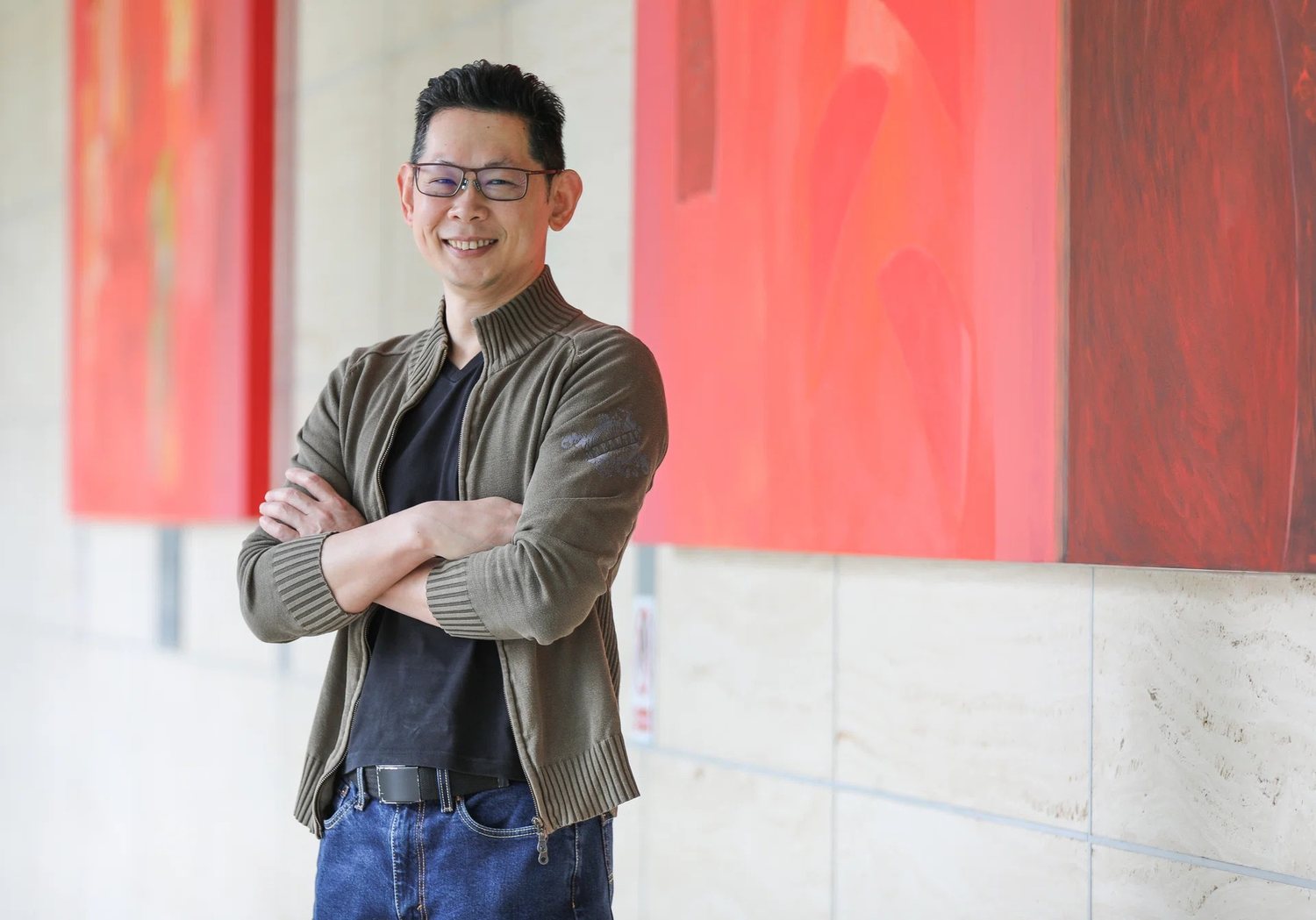
Sant Qiu founded Maneuver Marketing in 2001 with his wife, right after they graduated from university.
The company helped small businesses in Singapore with marketing and branding, designing brochures and websites. It was small, honest work. Then the company went dormant.
From 2002 to 2007, Sant tried everything else.
He worked as a programme manager and NLP coach at Adam Khoo's training company, then joined Dennis Wee Group in business development before spending two years in Indonesia helping with his family's interior furnishings business.
Nothing stuck.
He revived Maneuver Marketing from 2007 to 2013, but this time he tried partnerships: water filters with one partner, real estate training with another, a cookie company called My Lovebites with another.
Every partnership broke down. "I had a few partnerships, but they didn't last long, and I felt like I walked away with nothing to show for it," he told The Business Times.
That line is the turning point: "nothing to show for it" after 12 years of trying.
Most people would have walked away, but Sant did the opposite: he decided to stop partnering and start building something entirely his own, even if it meant learning the domain knowledge from scratch.
He made a plan.
Not a vague ambition, but a three-phase strategy he would follow for the next decade.
Phase one: accumulate capital through a low-barrier business, which for Sant meant marketing training.
From 2014 to 2017, he shifted Maneuver Marketing away from one-on-one consultancy toward group coaching and large-scale workshops on copywriting, Facebook marketing, and business strategy.
He grew from a one-man operation in a Geylang shophouse to a team in their own premises at UB One in Ubi. By 2017, the company had accumulated nearly S$1 million in retained earnings.
Phase two: pivot from services to products.
This was the leap.
Sant had noticed a rising trend in probiotic health supplements, particularly for weight management. But the idea wasn't purely market-driven.
He grew up as a sickly child in an Indonesian village with limited access to doctors. His family relied on herbal remedies. He decided to combine probiotics with the traditional formulations he'd known since childhood, creating a pill designed for weight management.
He engaged a third-party specialist and a contract manufacturer in the US. He funded the product development entirely from Maneuver Marketing's reserves.
No investors.
No debt.
In early 2018, he launched the first product under the BB Company brand on his own e-commerce site, targeting American consumers.
First-year sales exceeded US$2 million.
The company was still in the red because of warehouse infrastructure costs, but Sant knew marketing and he knew how to adapt.
"We came from traditional marketing, where we tended to do things like brochures," he said. "We had to adapt it for social media, because such consumers tend to respond to different types of messages; it took us a while to adapt."
By 2019, the company was profitable.
By 2020, Sant noticed resellers buying his products during sales and listing them at higher prices on Amazon.
His response was to open his own Amazon storefront. Today, Amazon accounts for roughly 40% of total revenue.
In 2023, Maneuver Marketing's BB Company brand generated US$157.2 million in revenue, with more than 80% of sales going to American customers and cumulative sales since the 2018 launch exceeding US$340 million.
The company has never taken a single dollar of external funding.
Phase three hasn't started yet.
Sant's final phase, investing in and mentoring other brands, is planned for three to five years from now.
He wants to build the leadership team and growth infrastructure first. "The idea is to learn, do and then teach," he said.
The company is now in talks with Walmart, Target, and CVS to get its supplements onto American retail shelves for the first time.
So what can you take from this?
The service business is the funding round you don't have to pitch for.
Sant used four years of marketing training revenue to fund his product business with no VCs, no angel investors, and no dilution. If you're running a service business and dreaming of a product, your retained earnings are your seed round.
Partnerships aren't always the answer.
Sant tried water filters, real estate training, and cookies with different partners, and every single partnership collapsed because of misaligned ambition.
His breakthrough came when he stopped relying on other people's domain knowledge and decided to learn it himself. Sometimes the shortest path to building something is doing it alone.
Learn, do, then teach.
That's not a motivational quote.
That's a ten-year operating plan with three discrete phases, each with a specific milestone before moving to the next.
Phase one had a number (S$1M in retained earnings), phase two had a market (American consumers buying probiotics online), and phase three has a precondition (strong leadership team first).
If your business plan doesn't have phases with clear triggers for moving between them, it's not a plan. It's a wish.
You don't need to be in the market you sell to.
He runs a US$157M American health supplement business from Singapore, with American customers, an American manufacturer, and an Amazon storefront serving America, but a Singaporean team, Singaporean strategy, and Singaporean retained earnings behind all of it.
Geography is a constraint only if you let it be.
12 years of trying things that didn't work, then a plan, then $157 million.
I remember myself as a newbie learning much from Sant’s marketing books. He was one of the Singaporean OGs who shared and taught marketing concepts to many of us.
The brochure designer from Geylang is now in talks with Walmart, and that's what patience looks like when it's backed by a strategy.