Founders, 13 August 2026
She was a university lecturer in pharmacology. Then she quit to become a salesgirl in a watch shop.
Not a luxury boutique. A family watch business called Lee Chay & Company, run by her in-laws. She stood behind the counter selling watches to walk-in customers, a woman with a Master of Science in pharmacology from Monash University ringing up sales.
That salesgirl co-founded what became Southeast Asia's leading luxury watch retailer.
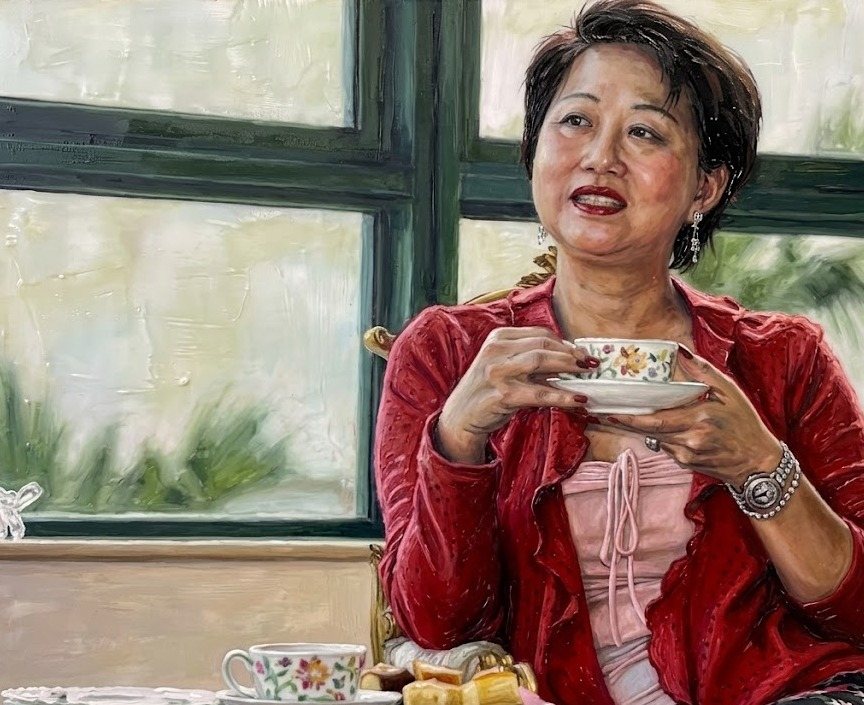
Jannie Chan Siew Lee was born in 1945 in Ipoh, Malaysia, the eldest of seven children in a Hakka Chinese family. Her father and grandfather were sinsehs, practitioners of traditional Chinese medicine. Medicine was the family language.
At 17, Jannie left for Melbourne to study. The following year, her father died of a sudden heart attack. She was 18.
After her father's death, accounts of her early life say she helped bring the rest of her family to Australia while continuing her education. She graduated from Monash University in 1968 with a Bachelor of Science in Physiology with Honours, and in 1971 completed a Master of Science in Pharmacology.
At Monash, she met Henry Tay. They married in 1969 and moved to Singapore in 1971, where Jannie began lecturing in physiology and pharmacology at the University of Singapore.
A career in academia was secure, respected, and predictable. She walked away from it in 1973.
She joined her in-laws' family watch business, Lee Chay & Company, starting as a salesgirl and learning the trade from behind the counter before eventually managing the branch at Colombo Court. What looked like a step down, from lecturer to salesgirl, became the apprenticeship from which she spotted an opportunity to reinvent how luxury watches were sold.
She saw a gap: a dedicated ultra-plush showroom specialising in fine Swiss watches, a concept that didn't exist in Singapore's watch retail at the time. The in-laws' business wasn't the place for that vision.
So she and Henry left and built their own.
In 1977, they opened Orchard Watch at Colombo Court, and encouraged by its early success they partnered with department store Metro Holdings to co-found The Hour Glass in 1979. The first boutique opened in Lucky Plaza, selling Patek Philippe, Vacheron Constantin, Audemars Piguet, and Piaget.
In 1987, they bought out Metro Holdings and took full ownership.
The Hour Glass listed on the Sesdaq exchange in 1988 and upgraded to the SGX mainboard in 1992. Jannie served as executive vice-chairman and drove the company's expansion across the Asia Pacific region for more than four decades, from 1973 until her retirement in 2016.
Her son Michael Tay took over as Executive Director in 2005, continuing the family's stewardship of the business. During the pandemic, as demand for luxury timepieces surged globally, The Hour Glass crossed S$1 billion in annual sales in 2022.
Jannie Chan was the first woman to serve as president of the Singapore Retailers Association, holding the role from 1999 to 2016, and the first woman to lead the ASEAN Business Forum.
In 1997, she was named one of the Leading Women Entrepreneurs of the World in Paris. Oxford Brookes awarded her an honorary doctorate in 1999, and Monash gave her its Distinguished Alumni Award in 2003.
Her later years were not without turmoil.
After retiring from The Hour Glass, she went through highly publicised family disputes and financial litigation, including bankruptcy proceedings in 2019.
But even before those difficulties, Jannie had begun a quieter chapter.
Around 2004, she founded Scientific Tradition, pursuing mushroom-derived health compounds through traditional knowledge and modern research, and established Save Our Planet Investments the following year. In 2007, the Save Our Planet Foundation followed, focused on reforestation.
Her grandfather was a sinseh.
She studied pharmacology.
She spent more than four decades selling watches.
And in her sixties, she returned to a field surprisingly close to where her family began: traditional medicine, now through the lens of modern science.
=============
Jannie Chan.....
Her father died when she was 18, and she helped hold her family together in a foreign country while finishing her degree. That tells you who she is. She doesn't walk away from responsibility.
The career pivot from lecturer to salesgirl is the detail most people would be too proud to do. She had a master's degree from Monash, and she could have stayed in academia for life. Jannie herself described her management style as scientific, grounded in facts, figures, and testable assumptions, and the pharmacology didn't disappear when she stepped behind the counter. It became her operating system.
For those in business...remember this...expertise in one field doesn't disqualify you from another. Your background isn't a limitation. It's a lens that lets you see things your competitors can't.
And if you're not a business owner, the lesson is simpler. At 18, she lost her father and at 28 she left a secure career to sell watches. In her sixties she went back to traditional medicine, and in her seventies she faced public difficulties that would have ended most people's public lives.
She kept going.
Your first career is not your last career, and your grandfather's trade might turn out to be your final one.
It might be tough now. But keep going.